







Arroyo seco
Archeological site
Arroyo seco
Arroyo Seco is one of the most representative rock art sites in the north-east of Guanajuato state. The imagery, created above all by hunter-gatherer societies during the pre-Hispanic period, constitutes one of the most emblematic such examples from central and northern region of Mexico.
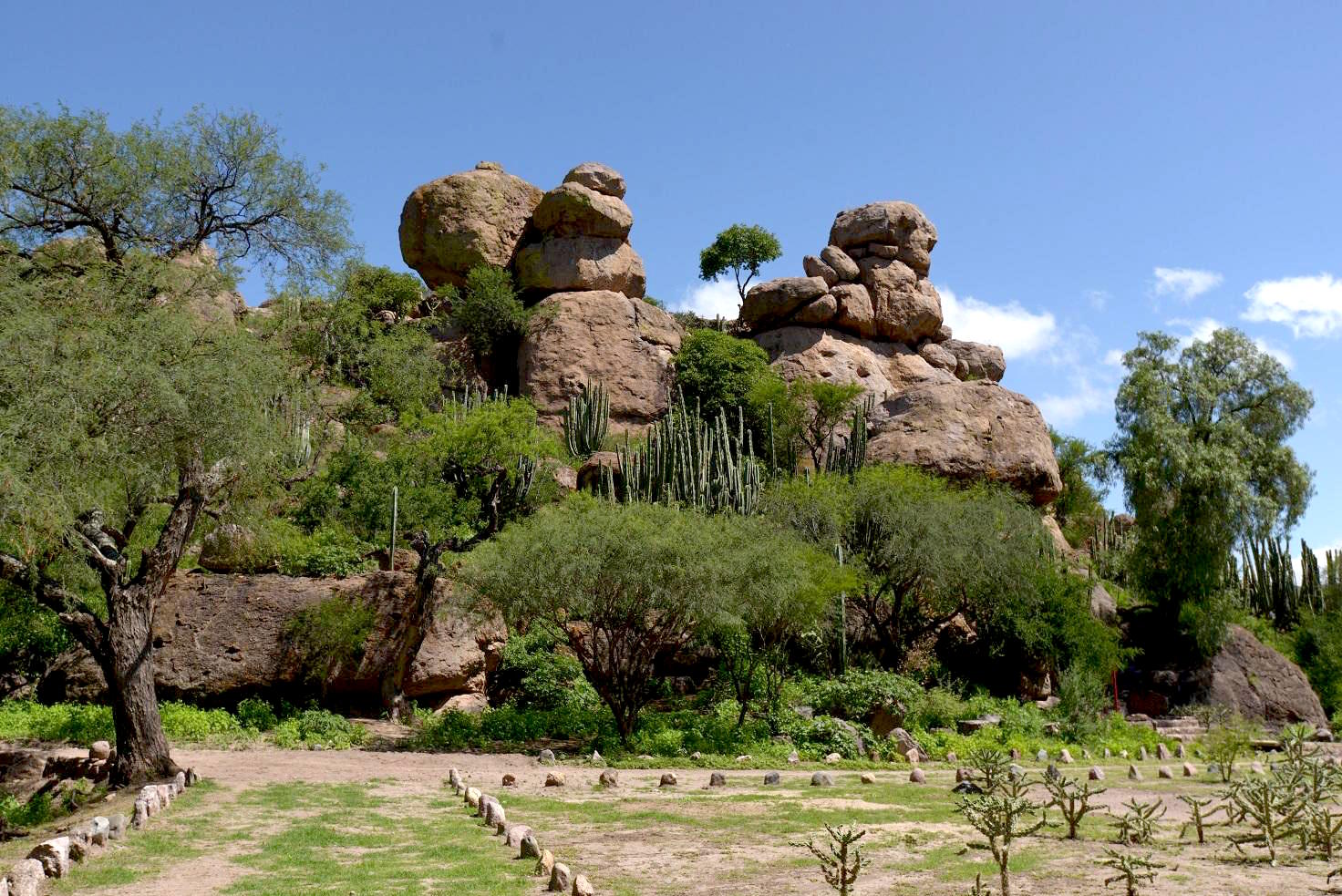
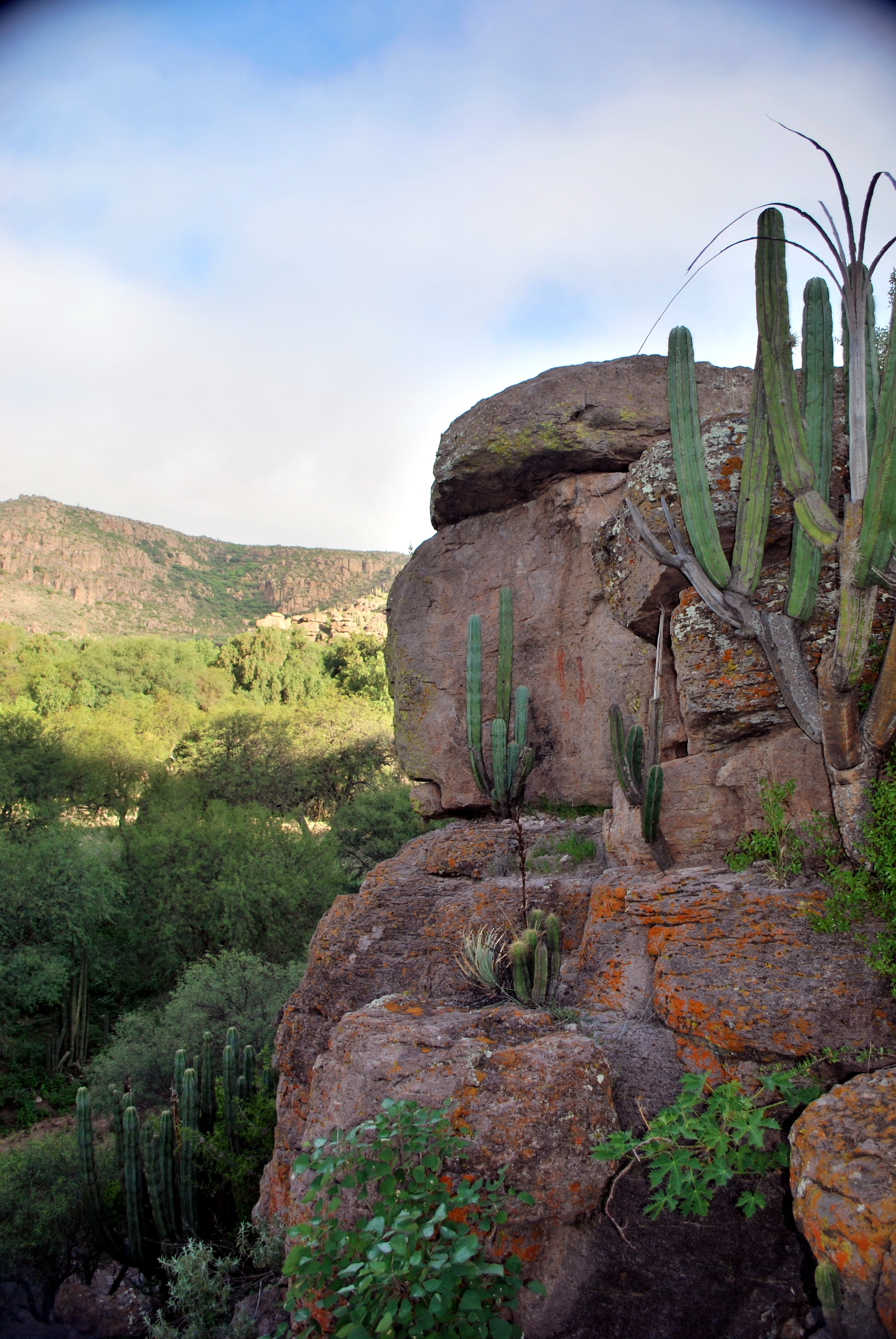
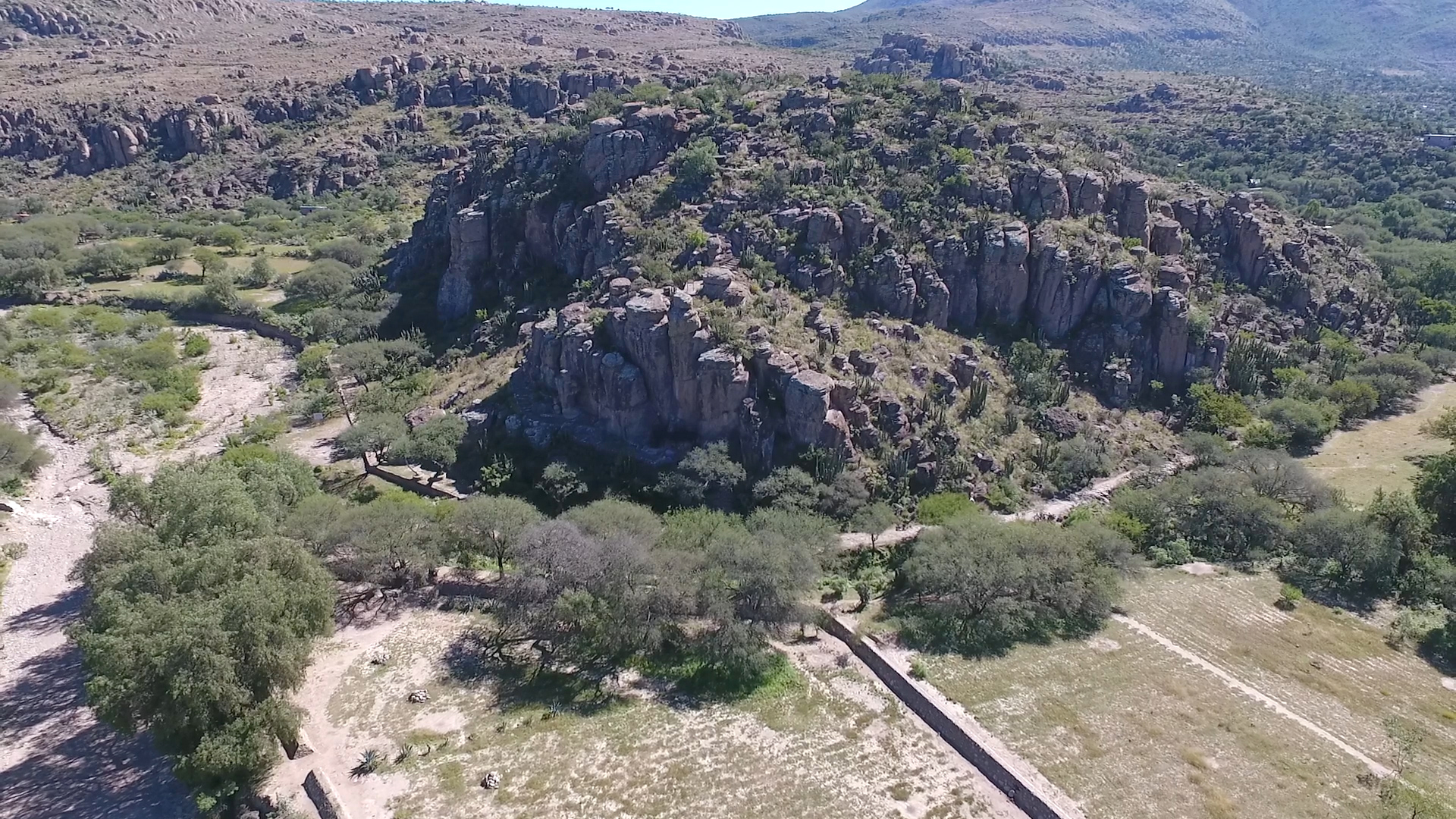
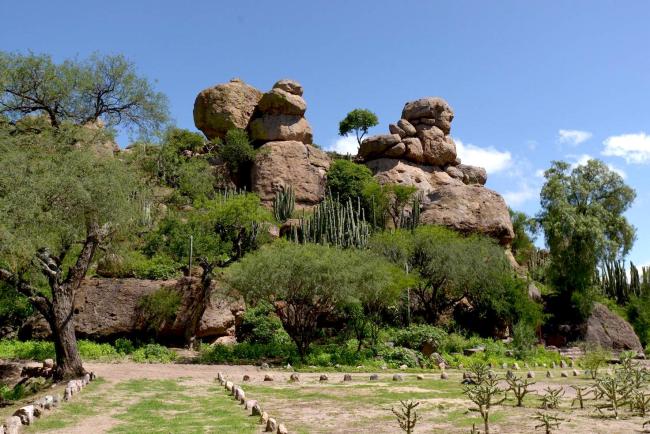
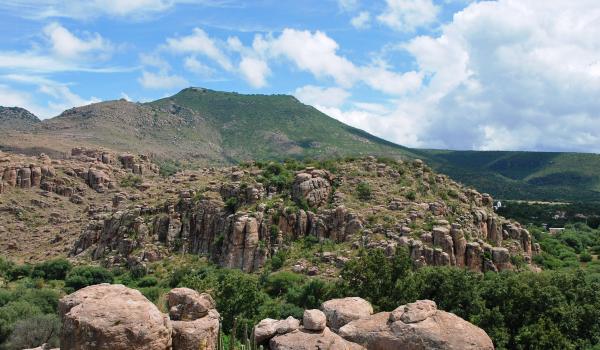
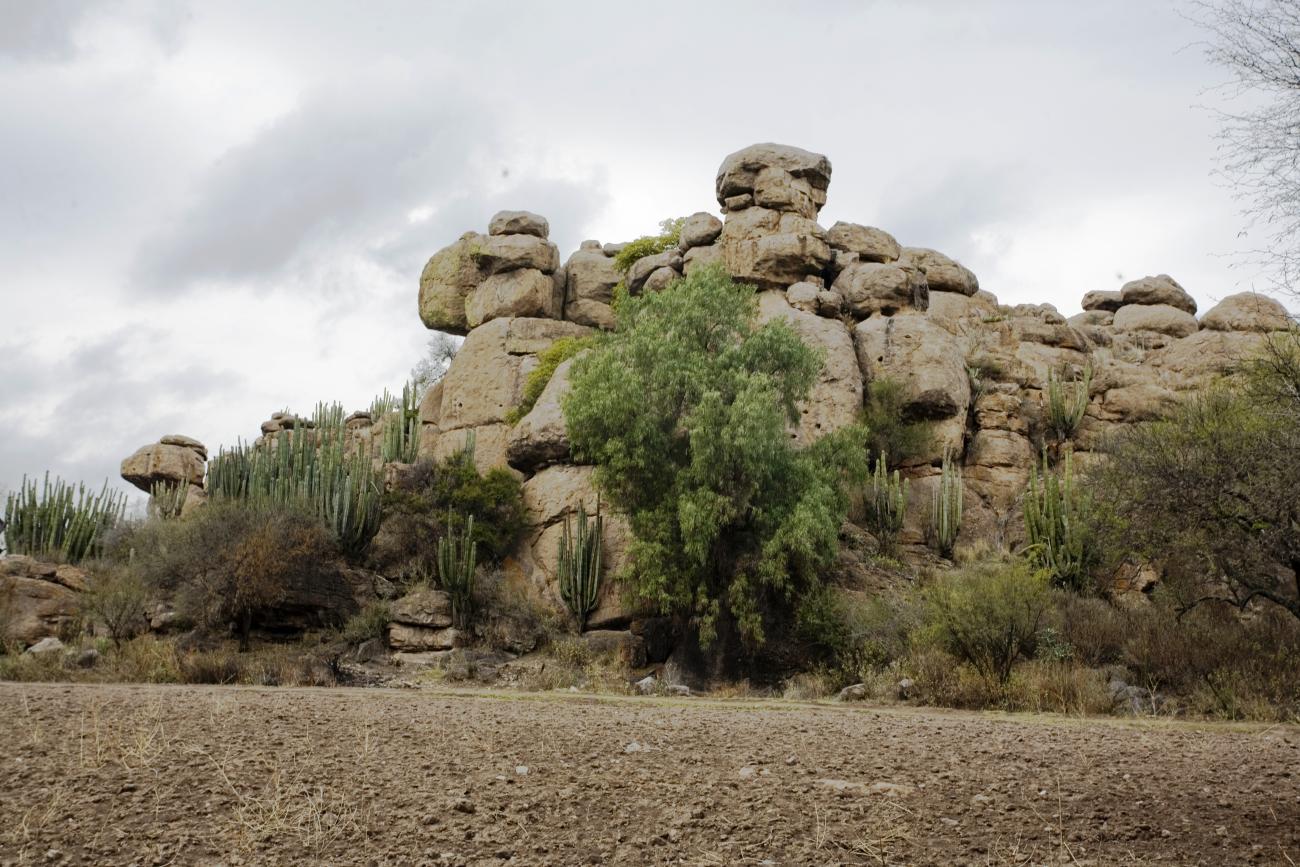
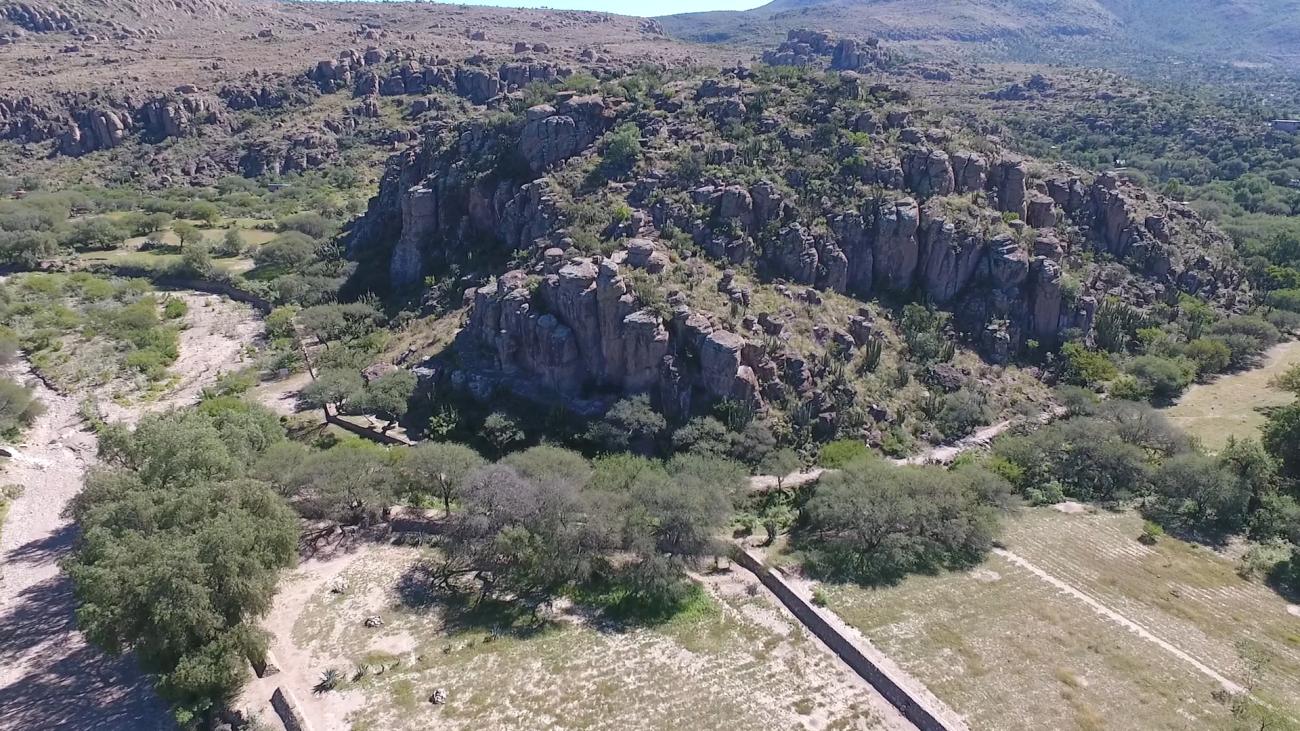
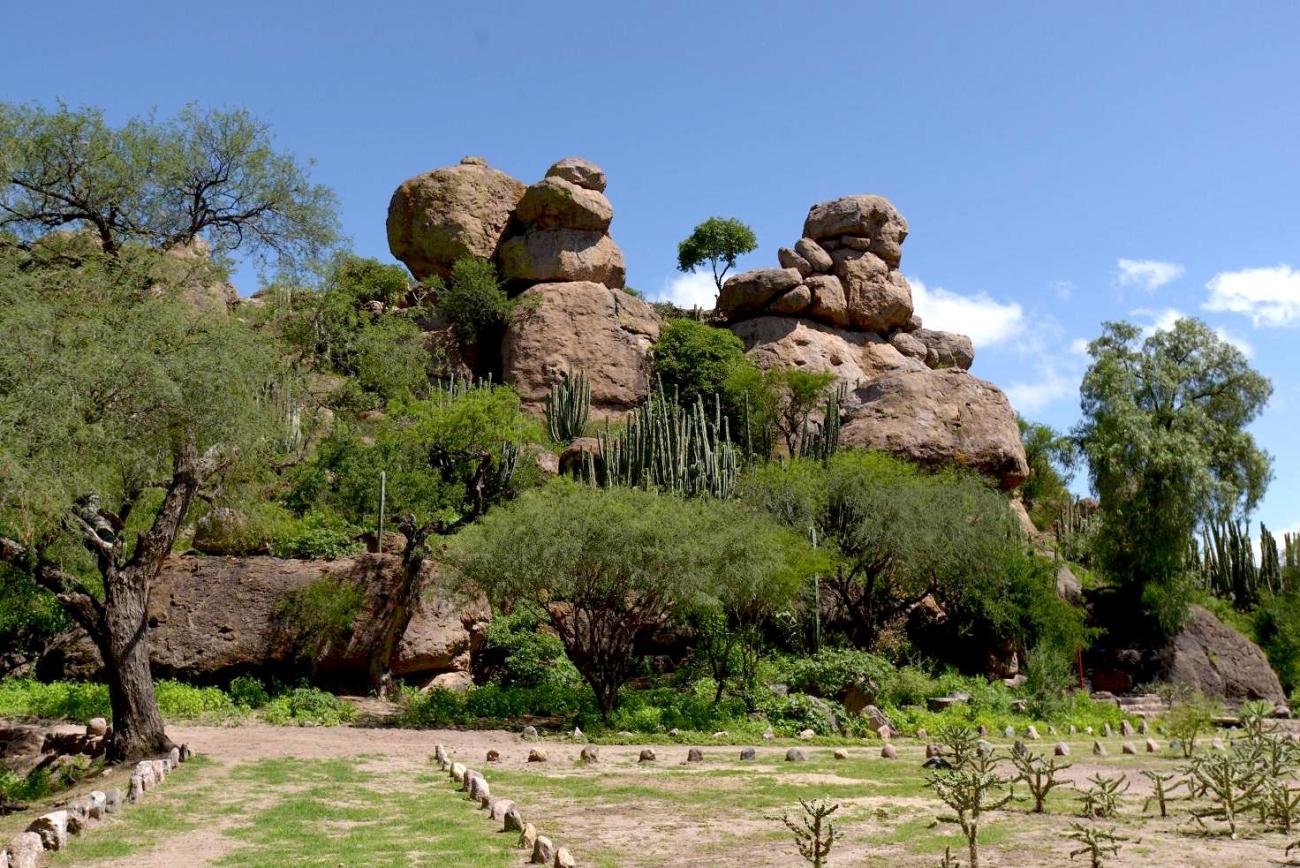
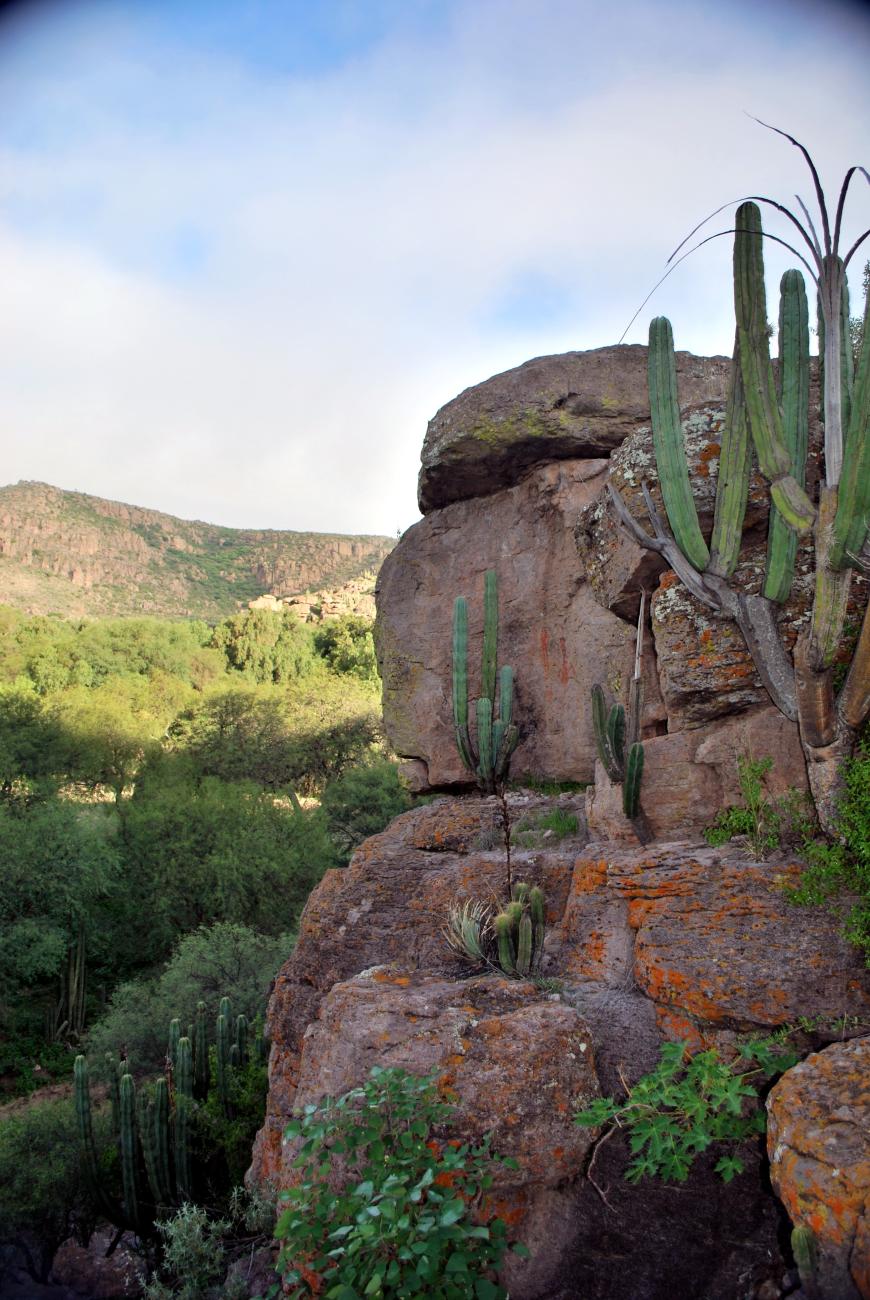
Arroyo Seco is located 2.5 kilometers to the south-east of the town of Victoria, at the heart of a small fertile valley crossed by a riverbed that is dry most of the year. The hills surrounding this valley are formed of soft tuff, which the action of wind and water has eroded into a landscape with singular characteristics: capricious columns like extravagant stone sculptures on which the pictorial motifs were painted. The sheer number and variety of images drawn on the rocks makes this place a veritable synthesis of the region’s rock art. Together, the art and the surrounding landscape offer an example of how the ancient hunter-gatherer peoples who lived in the north-east of Guanajuato state saw and understood the world.
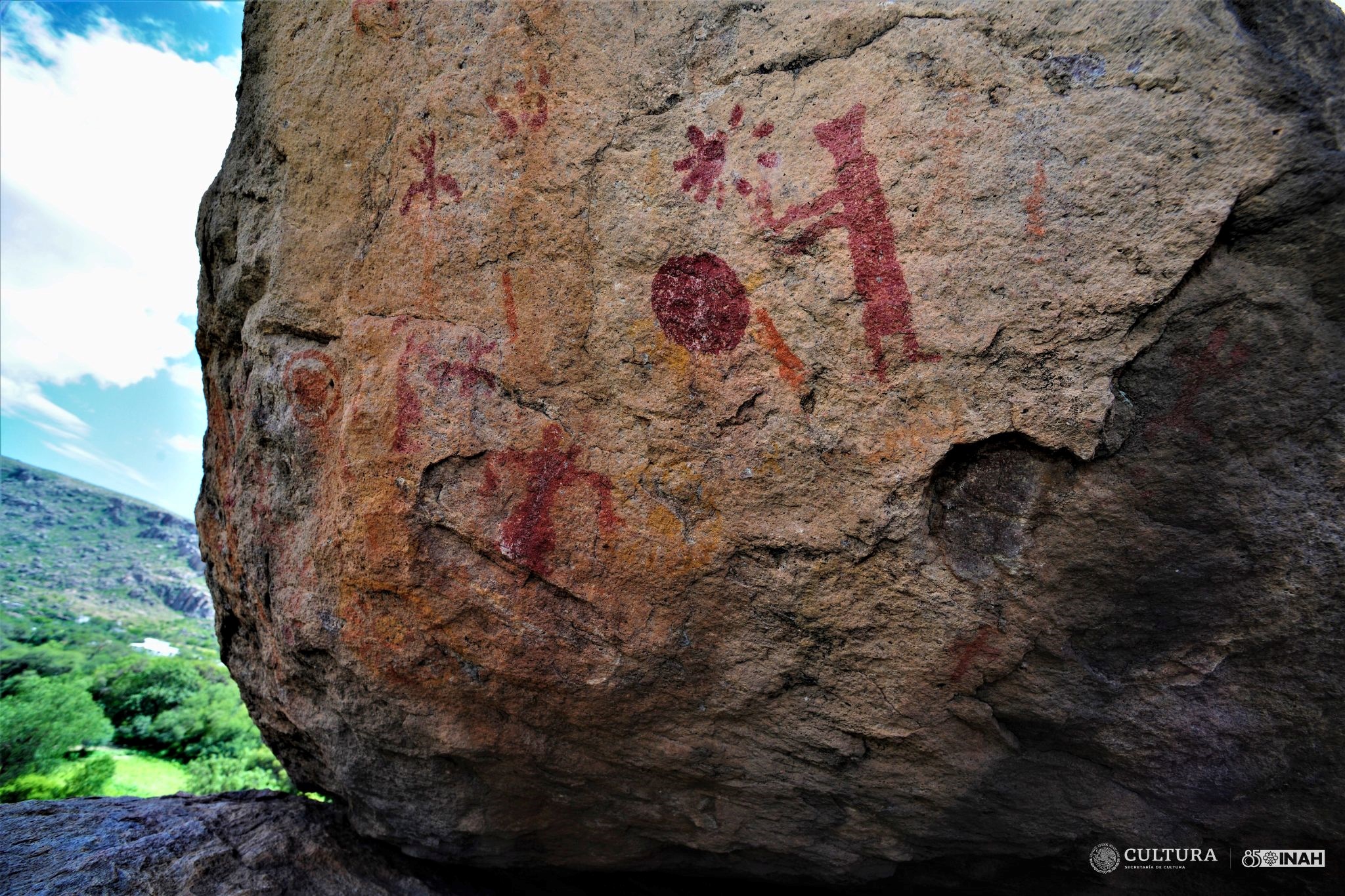
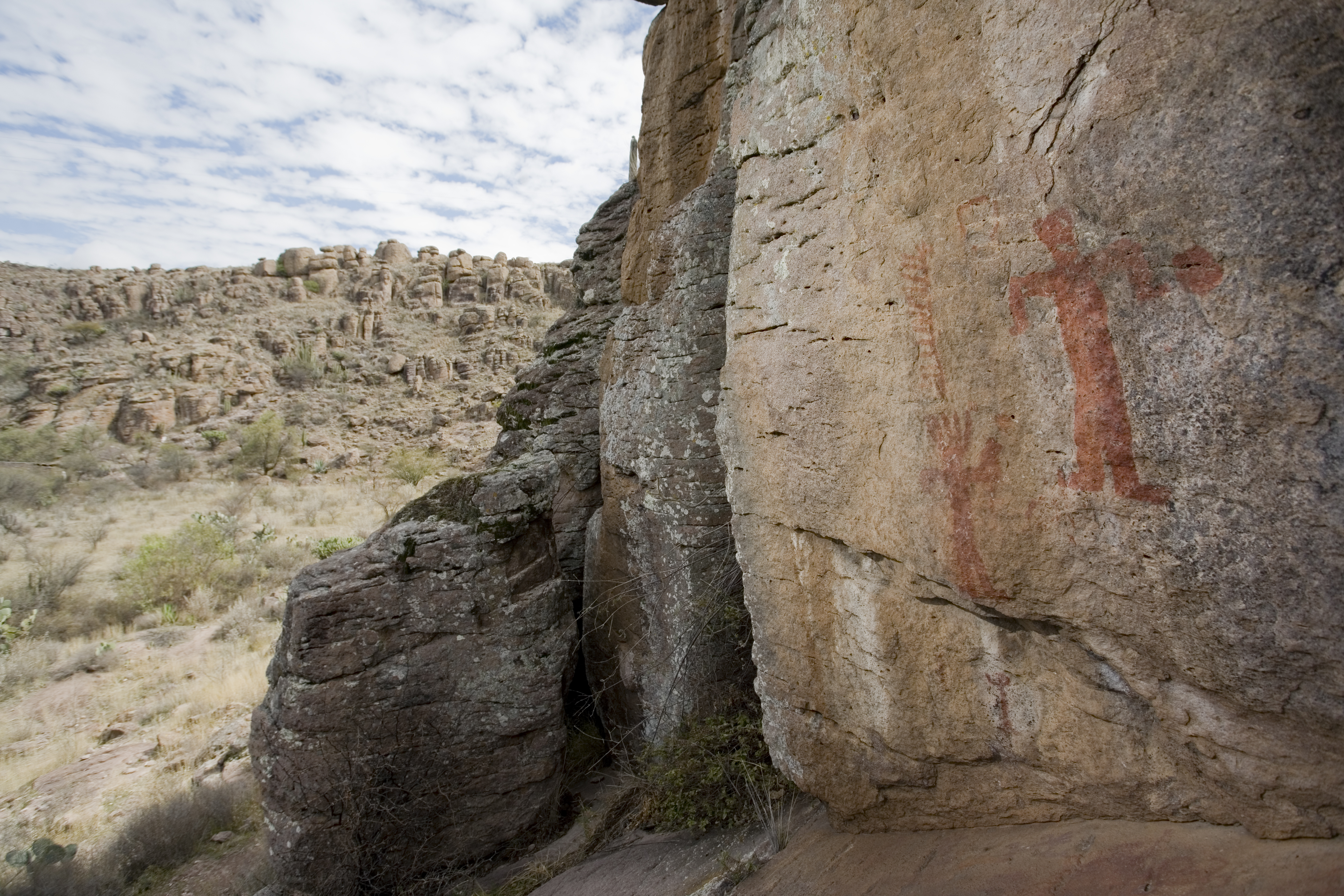
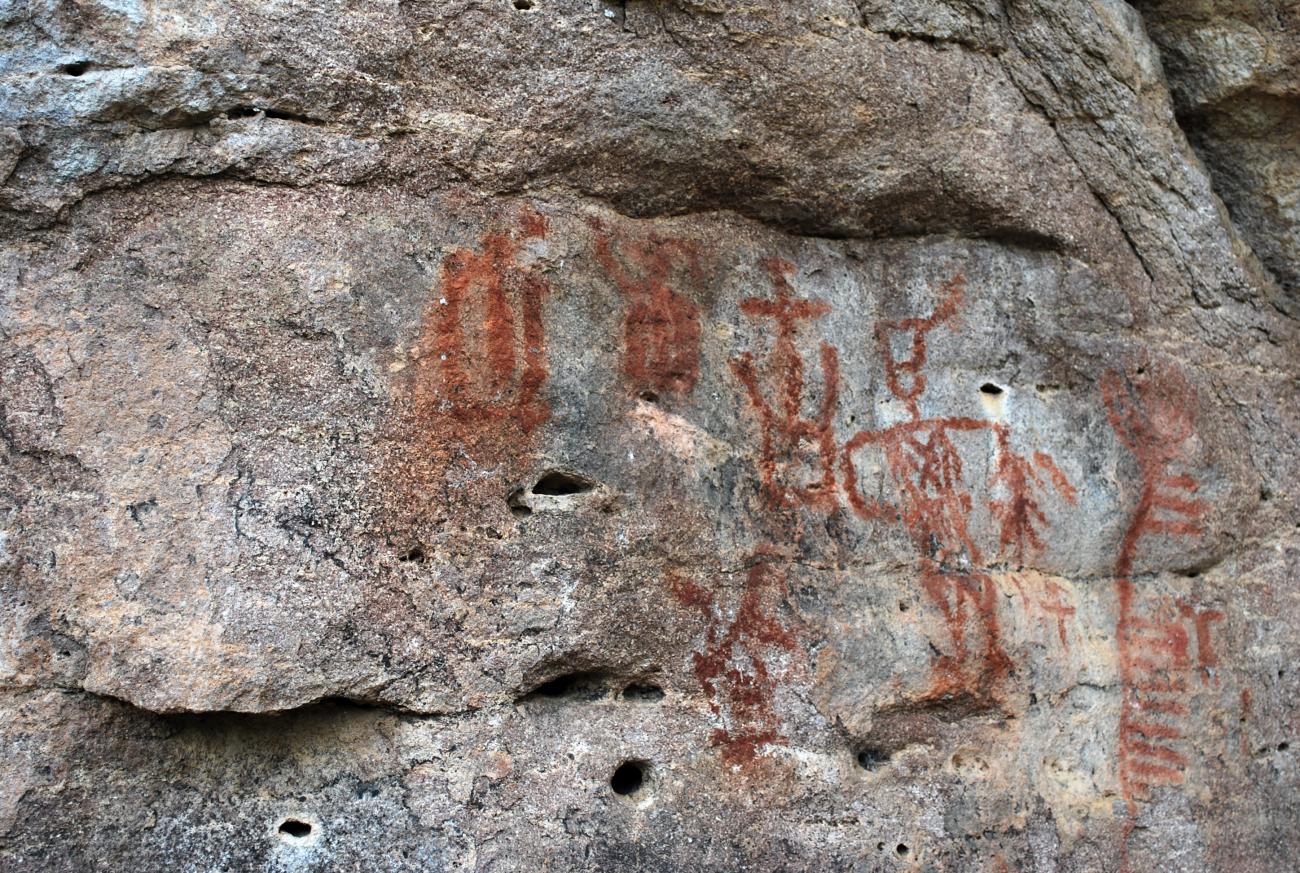
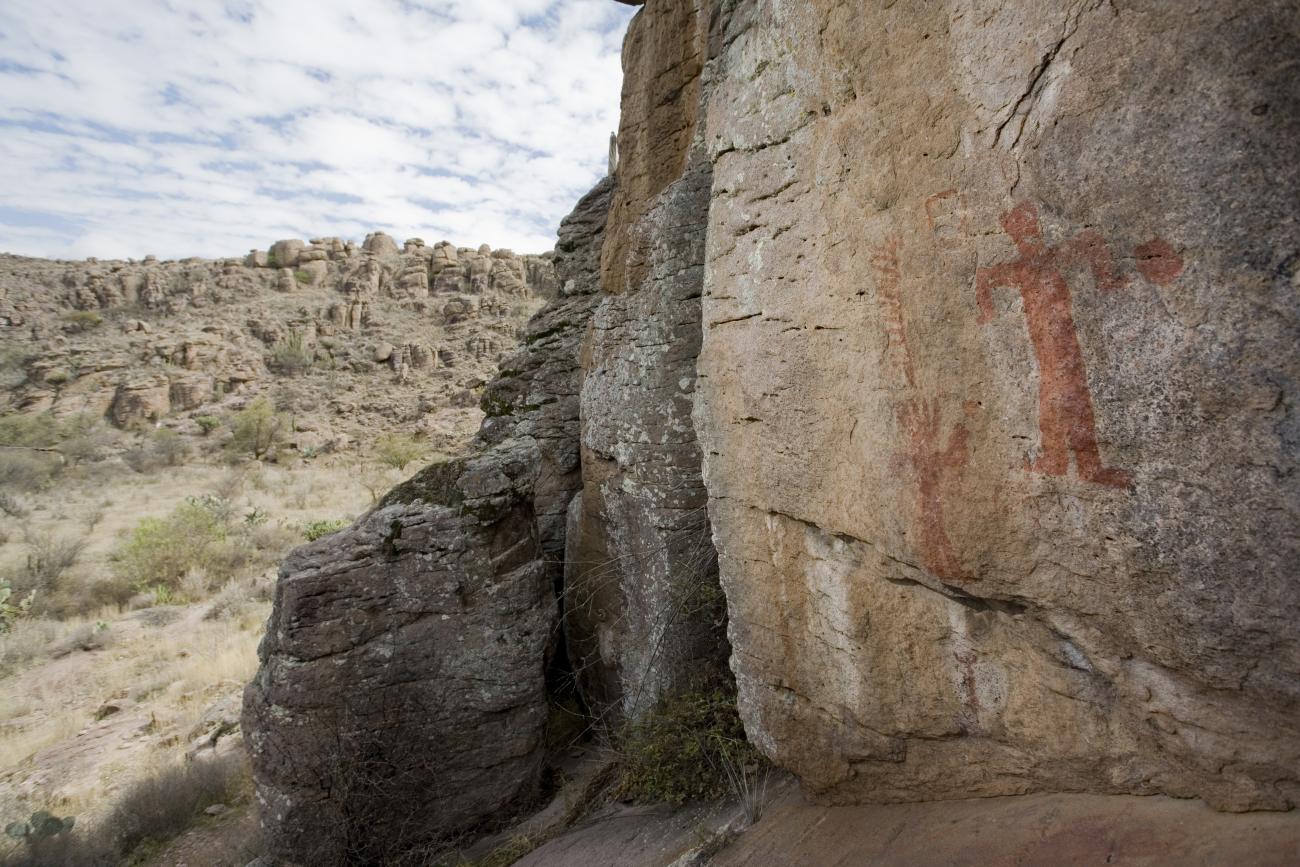
The site’s various rock supports comprise 46 pictorial groupings together with hundreds of motifs that are distributed over two small elevations known as La Zorra and La Pintada (or La Tortuga). The distribution of the pictorial motifs responds to factors closely related to the worldview, ritual and identity of the indigenous societies who inhabited this territory during the pre-Hispanic and Colonial periods. It is therefore of note that the painted panels on the hill of La Zorra are oriented towards the setting sun, while those on La Pintada or La Tortuga face the rising sun. Meanwhile, we may appreciate that a characteristic of the rock art of Arroyo Seco was an obsession with representing the human form, something shared with the whole region. However, there are also animal, plant and geometric forms.
The region’s rock art was already known of in the sixteenth century, as the priest Guillermo de Santa María made reference to an enigmatic place located somewhere near Sichú (San Juan Bautista Xichú de Indios, today known as Victoria) and Los Samúes (Mineral Real de San Francisco de los Amues/Sichú, now Xichú), simply called the “Painted Caves” which appears to refer to the large number of rock art sites in Victoria, including Arroyo Seco. In 2005 the Rock Art project began in the Victoria river basin, focused on researching the region’s rock art and the conservation of the Arroyo Seco site. In 2010, with the intention of protecting it and opening it up to the public, the site became part of the management plan promoted as part of the Fideicomiso de Administración de Inversión para la Realización de las Actividades de Rescate y Conservación de Sitios Arqueológicos (FIARCA), with federal support from the National Institute of Anthropology and History, and of the state government through the State Culture Institute and the municipality of Victoria. It was opened in March 2018.
Paisaje sagrado
The different hunter-gatherer societies incorporated the landscape into their cosmovision, transforming it conceptually into a sacred landscape. The inhabitants of the semi-desert associated specific places with events of mythical origin, giving them a special power; in the mountains and hills…
Paisaje sagrado
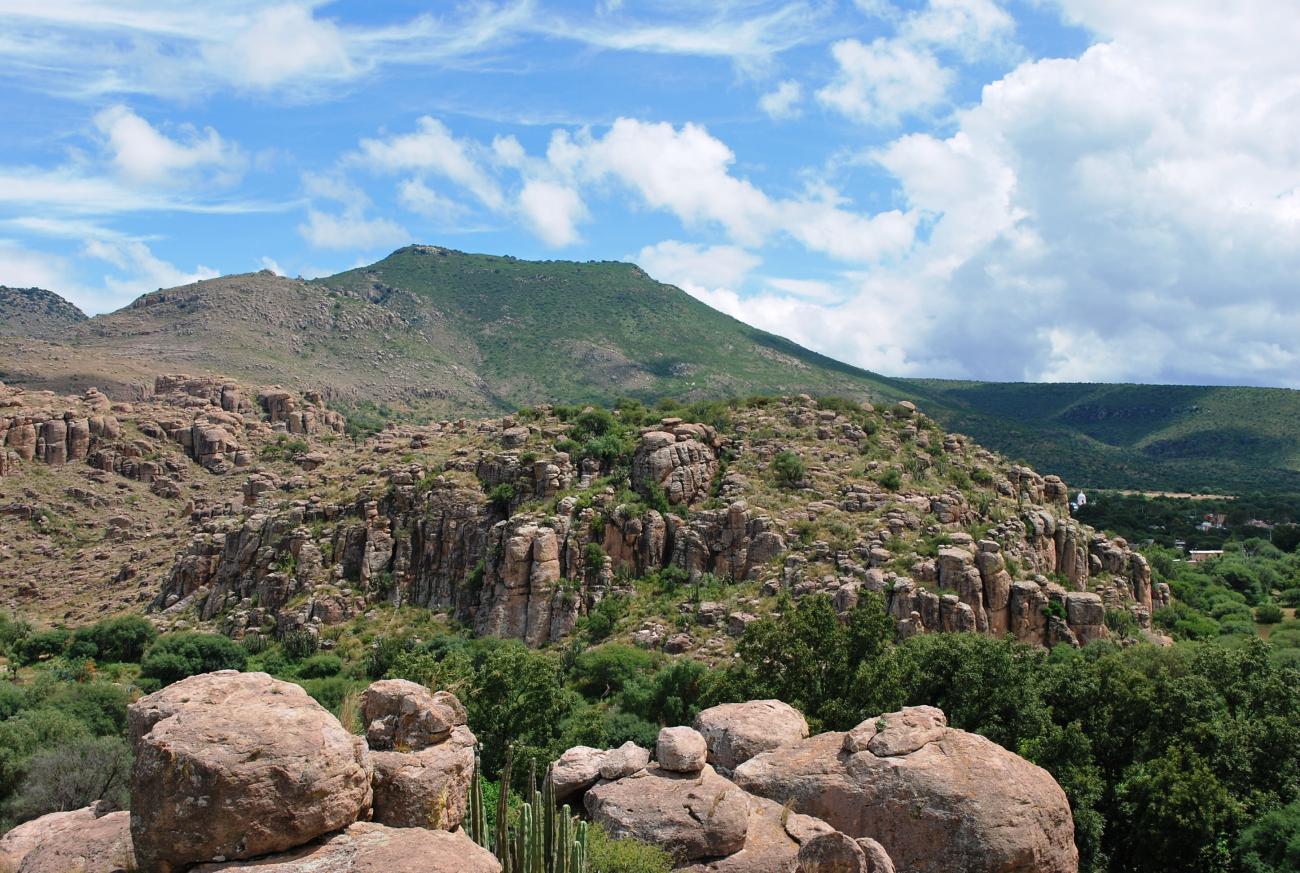
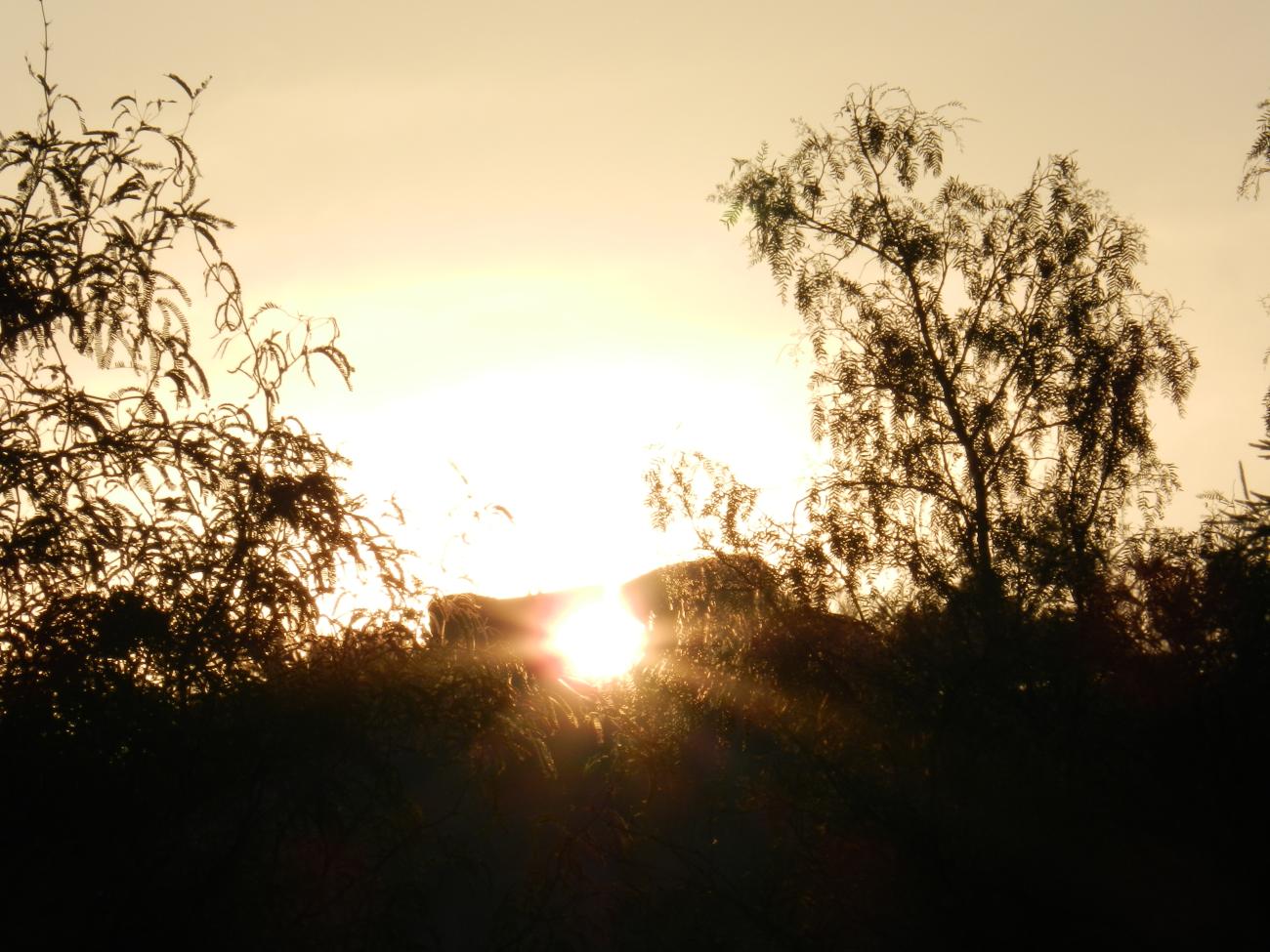


The different hunter-gatherer societies incorporated the landscape into their cosmovision, transforming it conceptually into a sacred landscape. The inhabitants of the semi-desert associated specific places with events of mythical origin, giving them a special power; in the mountains and hills lived the founding ancestors, the dead or the rain deities that were related to fertility, fecundity, health and the endless cycle of creation and death. According to the mythical content they assigned to the different landscapes, rituals were performed in which the practice of rock art occupied a central place: fertility rites, rites of passage, initiation, hunting and war among many other possibilities took place in the vast sacred geography of nomadic and semi-nomadic hunter-gatherers. In the end, the landscape was ritually marked by means of rock art.
The “Sun Stones”: In spring equinox.
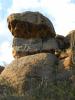
Rock formations of La Pintada hill
Caleidoscopio de colores
Numerous rock painting sites have been located in the northeast of Guanajuato; the most common color used was red -in various shades-, although there are also motifs painted in yellow and black tones; white was used almost exclusively after the Otomí colonization of the region during the colonial…
Caleidoscopio de colores
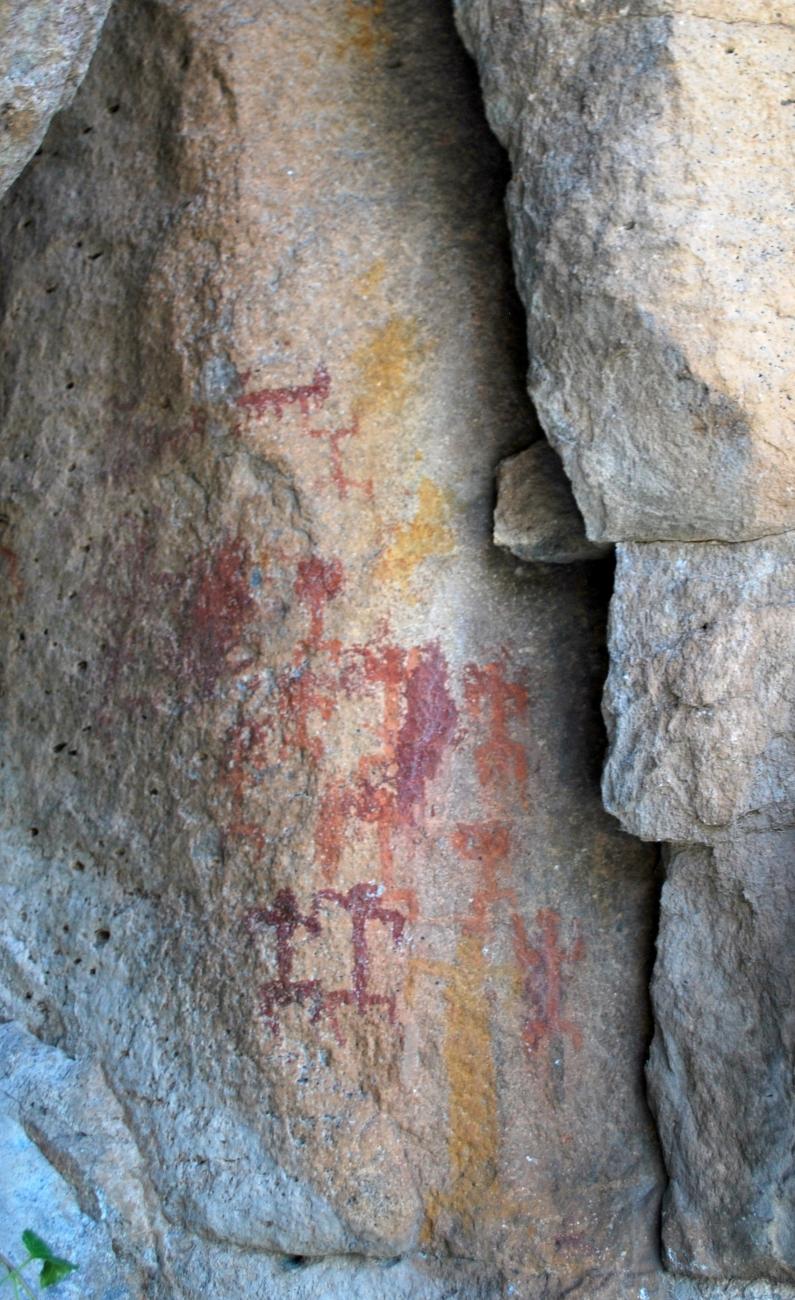
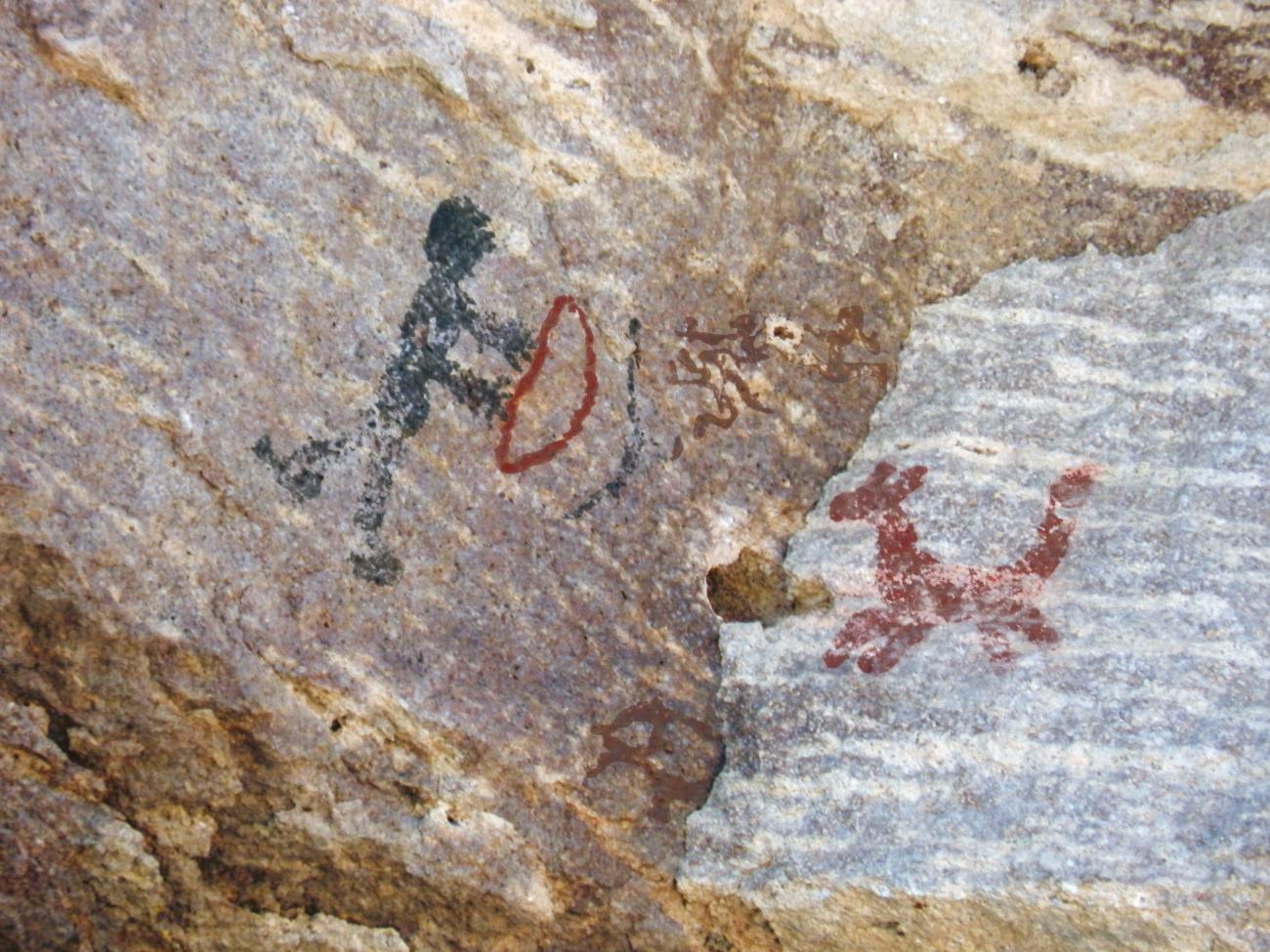
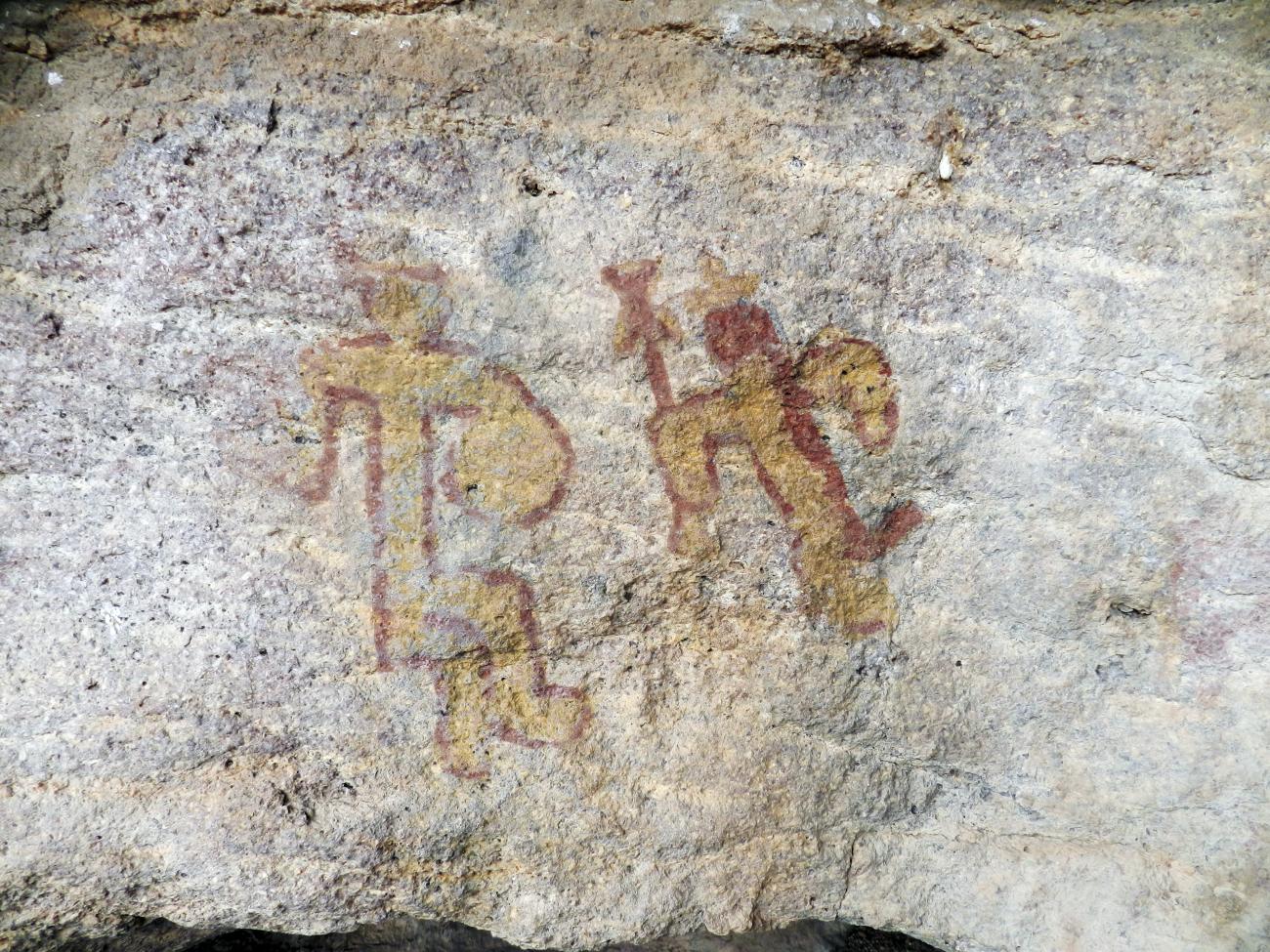

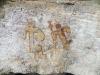
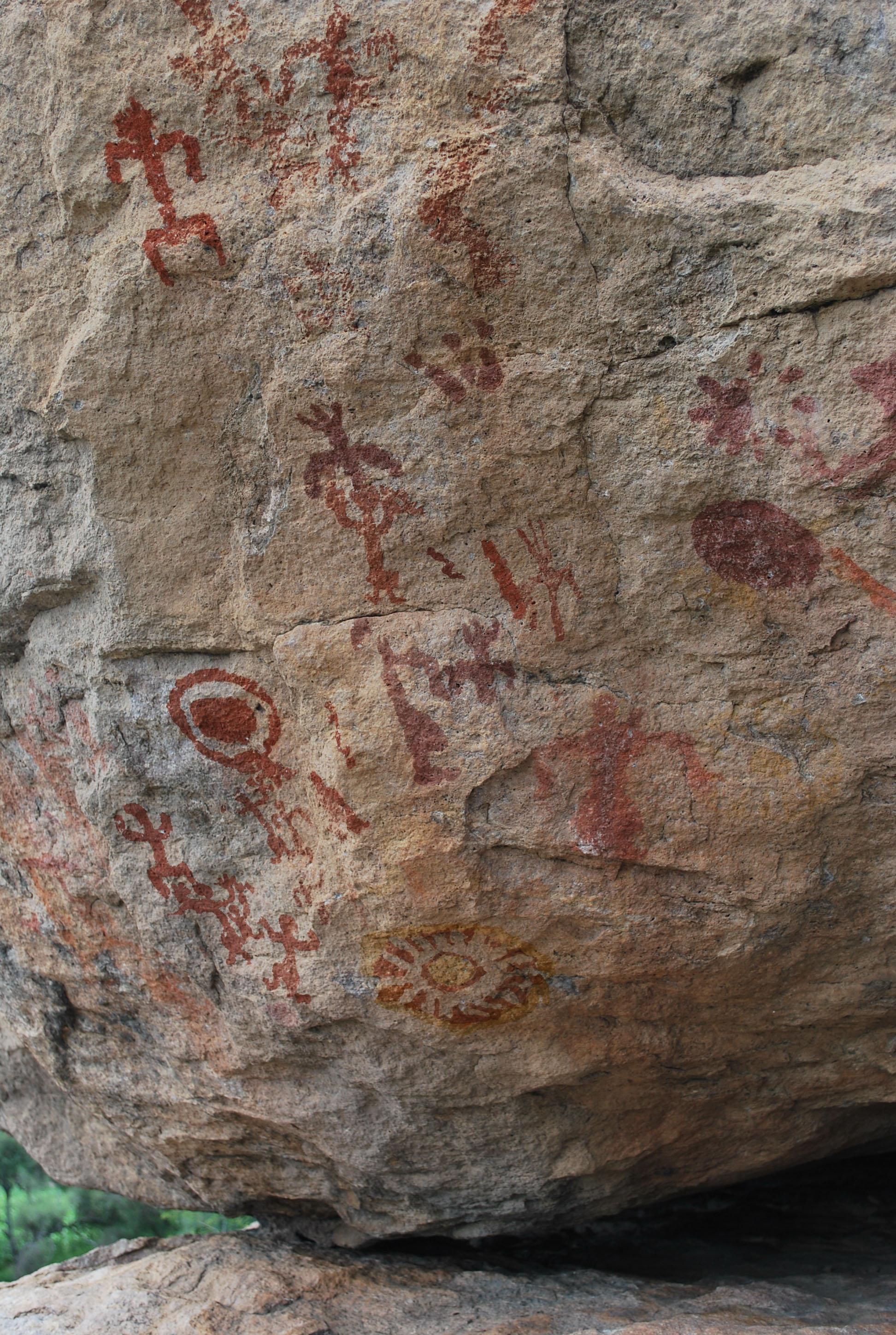
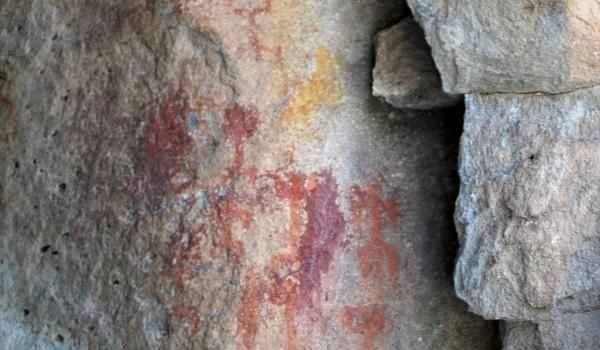
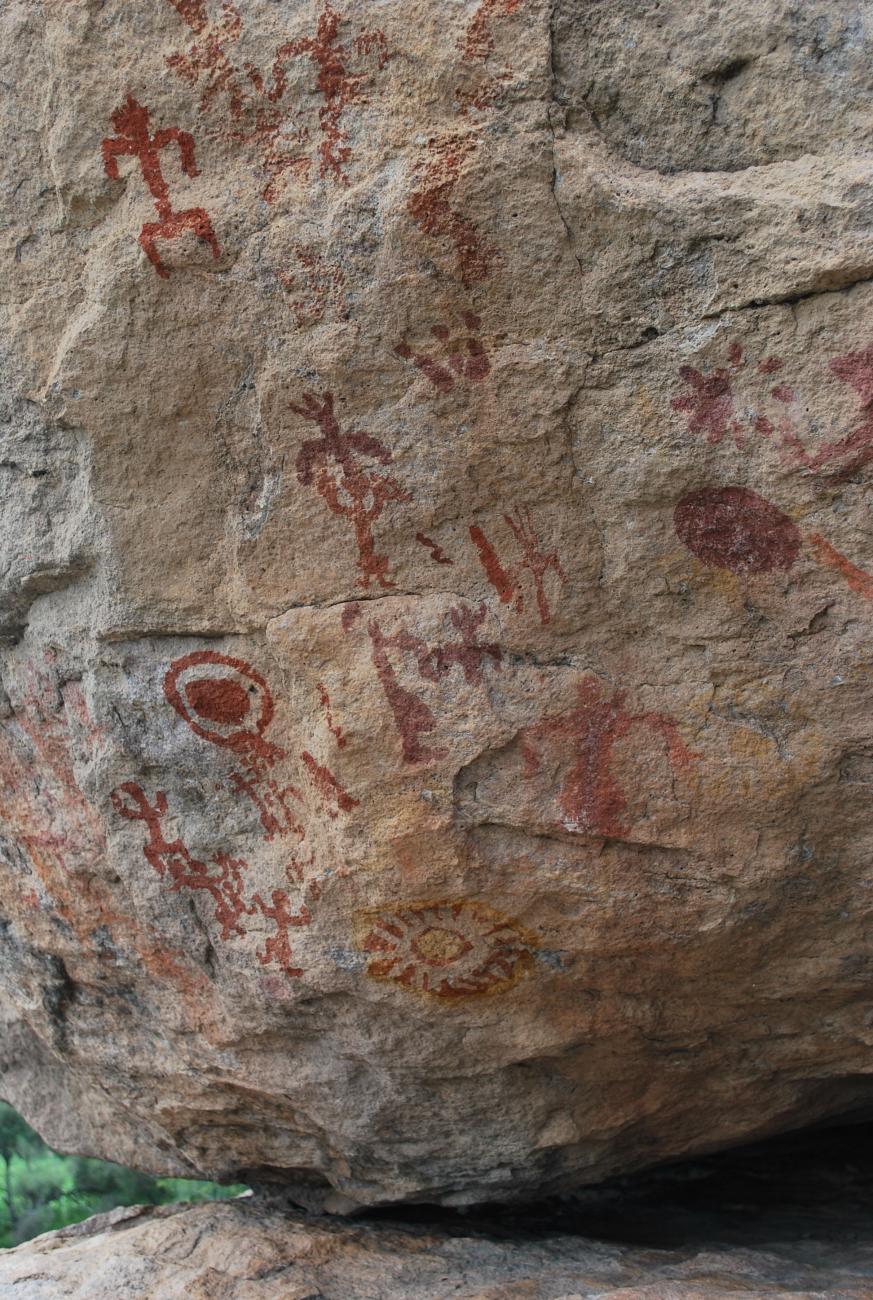
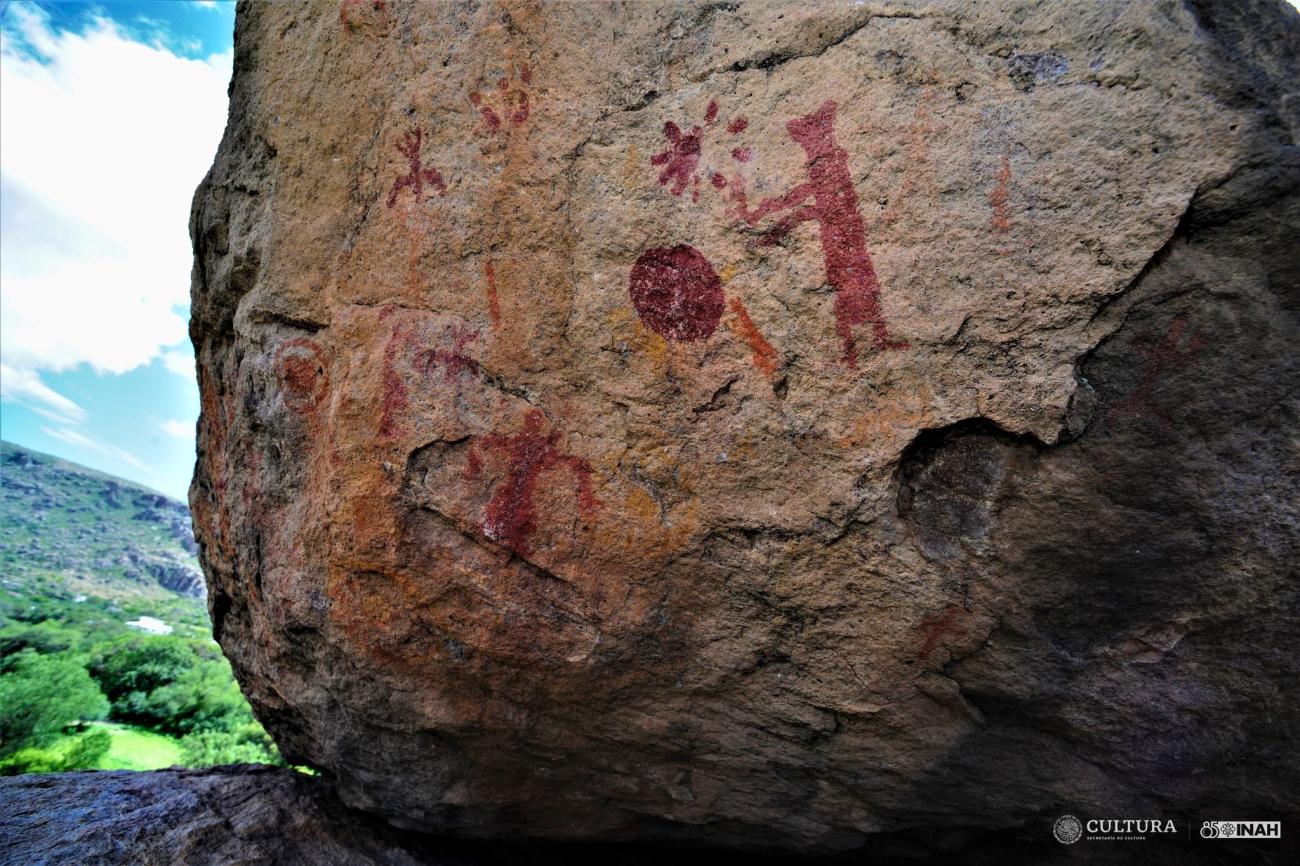
Numerous rock painting sites have been located in the northeast of Guanajuato; the most common color used was red -in various shades-, although there are also motifs painted in yellow and black tones; white was used almost exclusively after the Otomí colonization of the region during the colonial period. The average dimensions range between 15 and 25 centimeters, although it is possible to find human and animal figures from two centimeters long, to some close to a meter in length.
Anthropomorphic and zoomorphic in a hunting scene
Anthropomorphs of relative profile and open outline in red and yellow
La figura humana
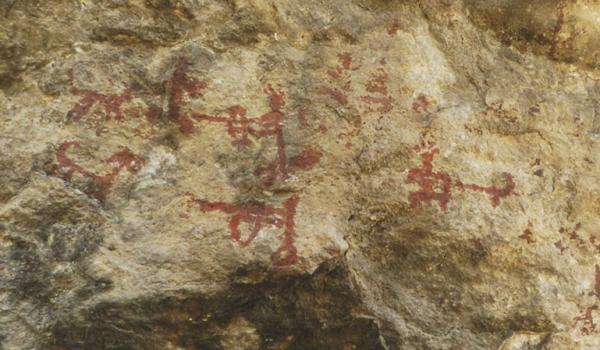
The cave iconography of Arroyo Seco shares with the rest of the region the obsession for the image of the human figure; the most recurrent form was the schematic representation from the front and in static disposition; occasionally it shows fingers and/or toes or certain attributes (headdresses,…
La figura humana
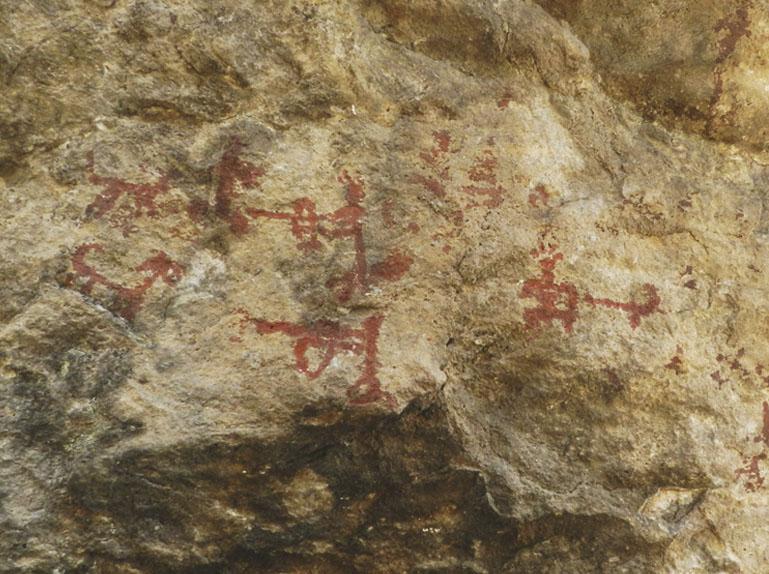
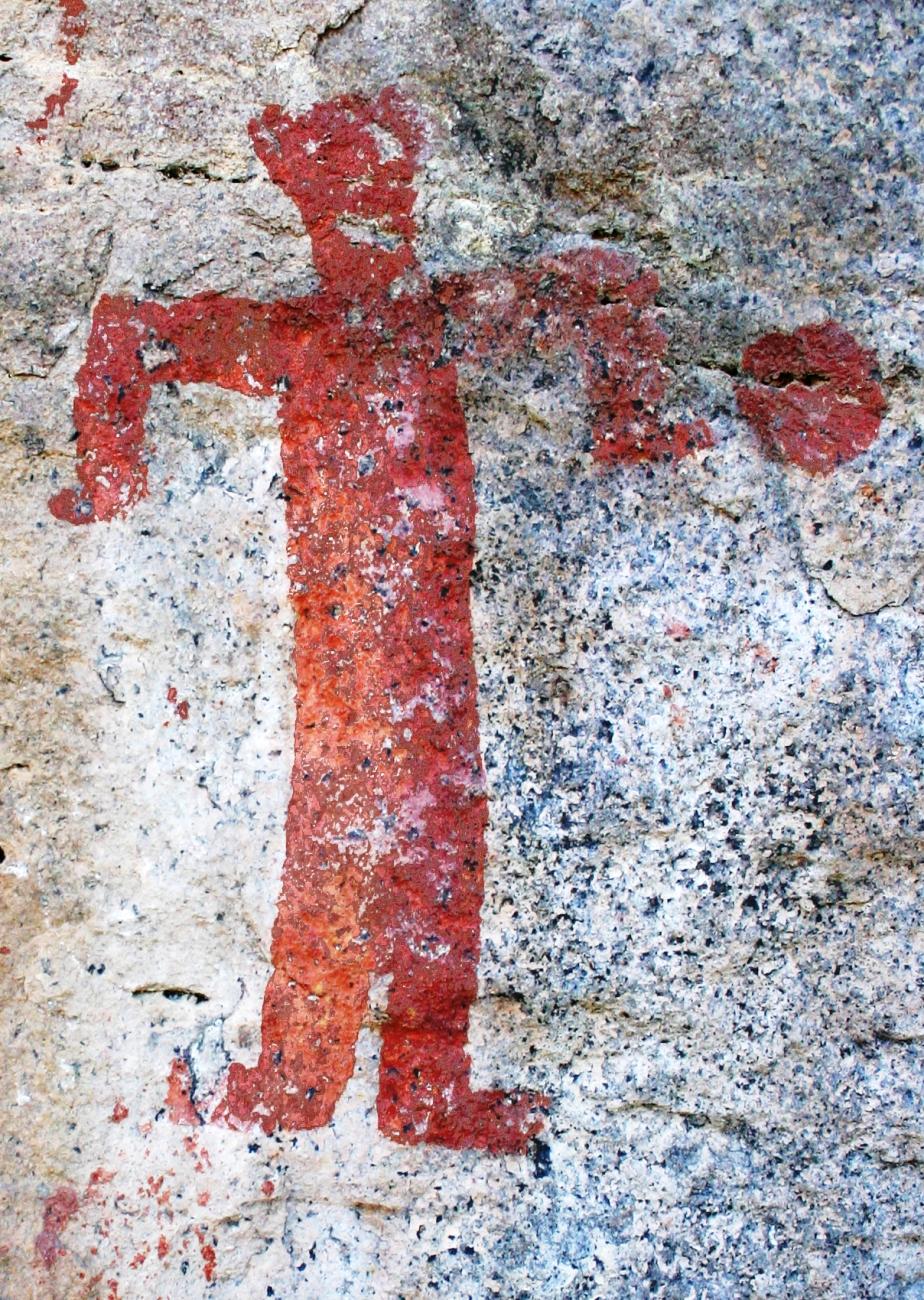

The cave iconography of Arroyo Seco shares with the rest of the region the obsession for the image of the human figure; the most recurrent form was the schematic representation from the front and in static disposition; occasionally it shows fingers and/or toes or certain attributes (headdresses, skirts, banners or bows and arrows); occasionally, it was captured in a dynamic way and with greater volume, which gave it certain realistic features. Most of these motifs do not present sexual attributes, although in the male specimens the sex was indicated with a vertical line as a continuation of the trunk. In spite of being hunter-gatherer societies, hunting scenes are scarcely represented, as are dances; the latter were formed by small groups of human figures holding hands or with their arms raised, very much in the way hunters danced during the night ceremonies known as mitotes.
Anthropomorphic motif
Anthropomorphic figure
Animales y plantas
The representations of animals are also schematic, so it is not easy to recognize the species to which they belong. However, it is possible to distinguish quadrupeds (foxes, coyotes, dogs and deer), birds (perhaps eagles or lammergeyers and some hummingbirds), reptiles (lizards, frogs and snakes)…
Animales y plantas
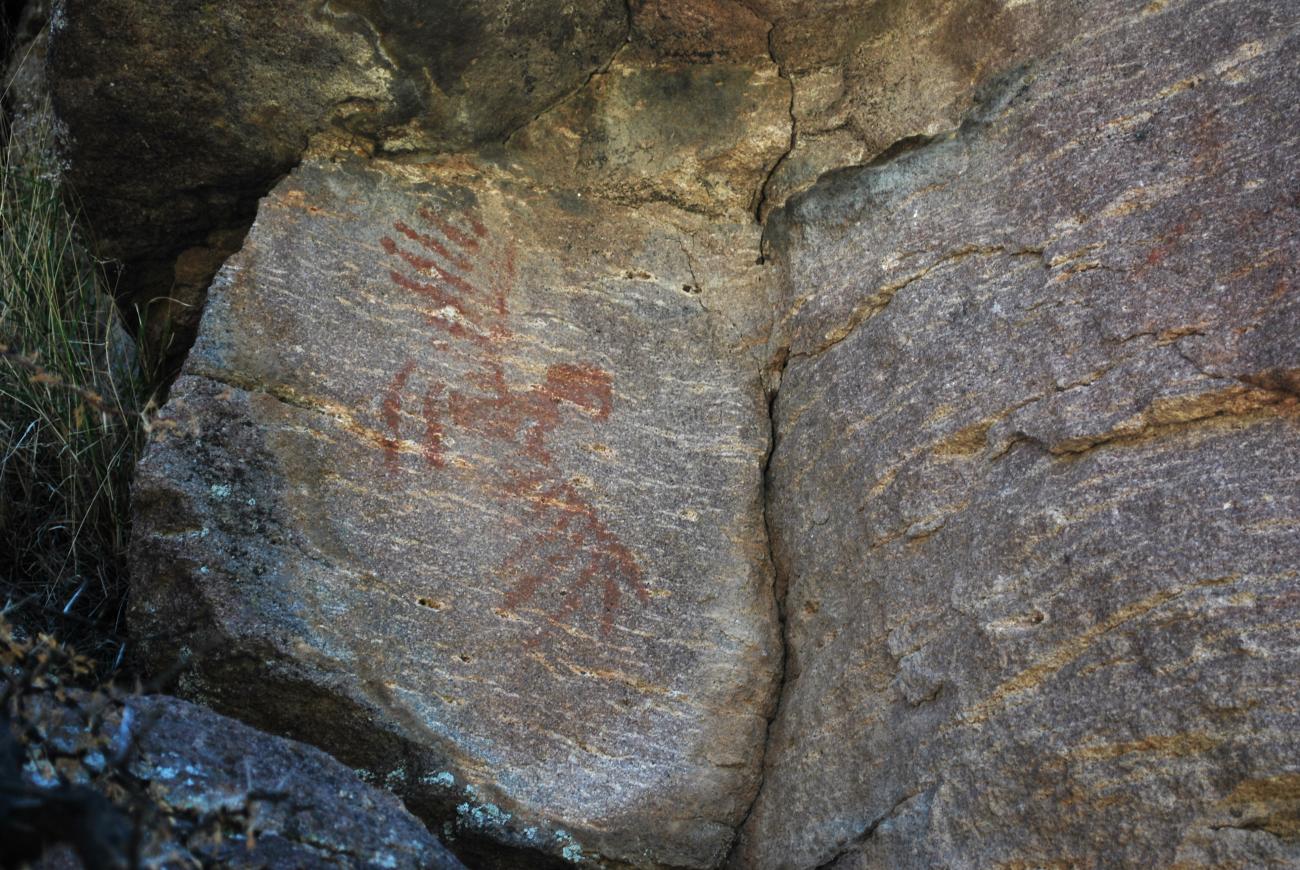
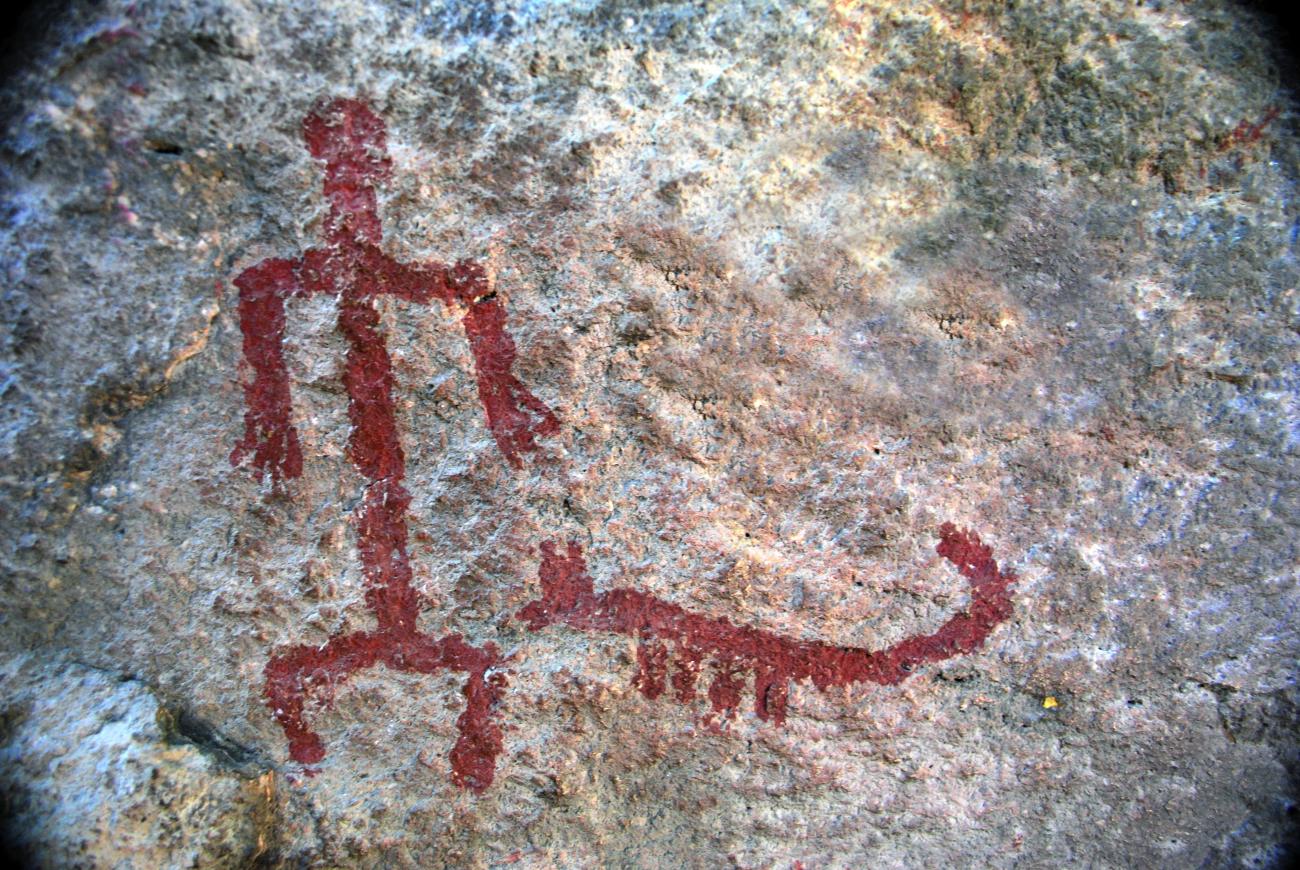
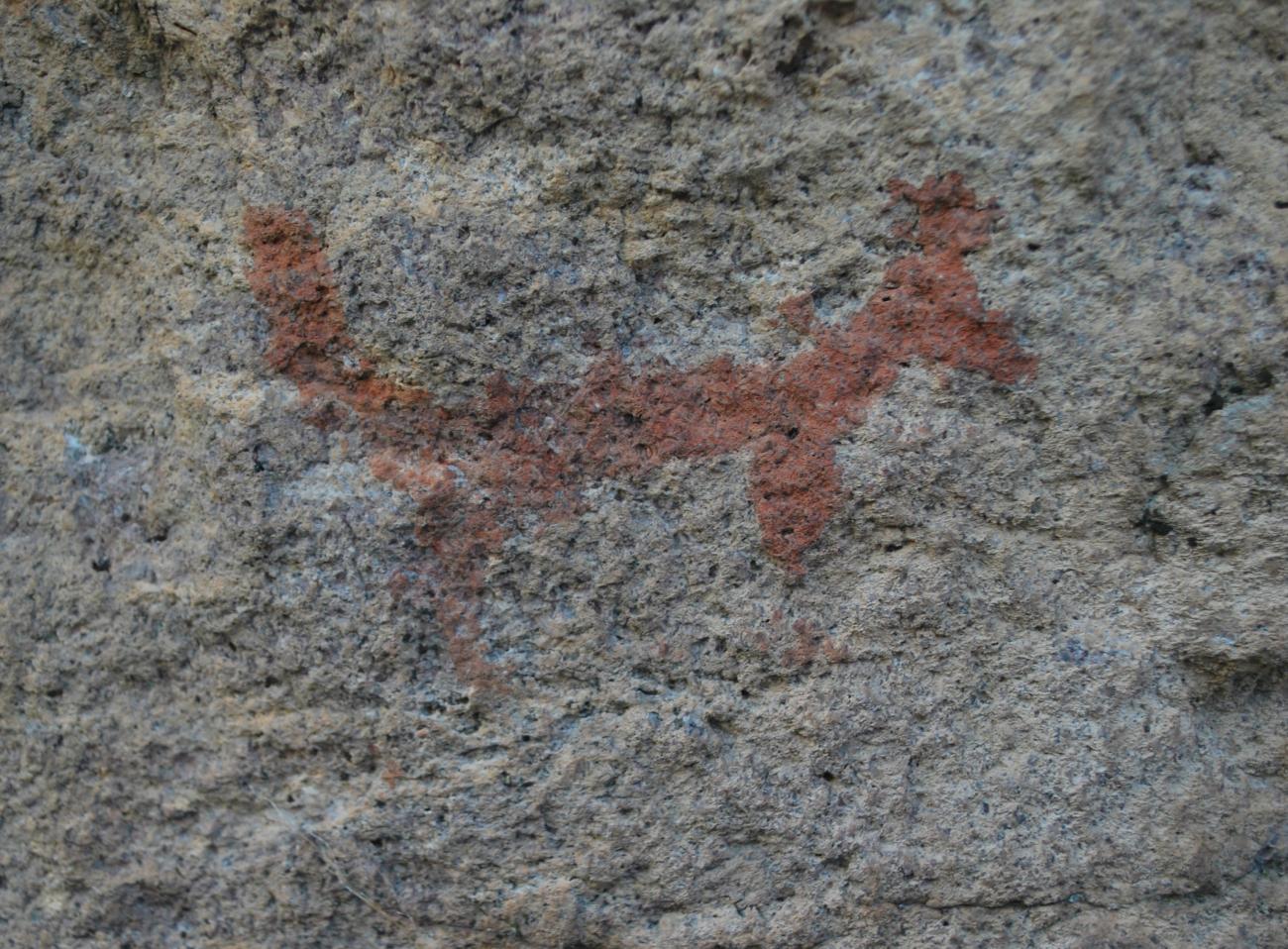
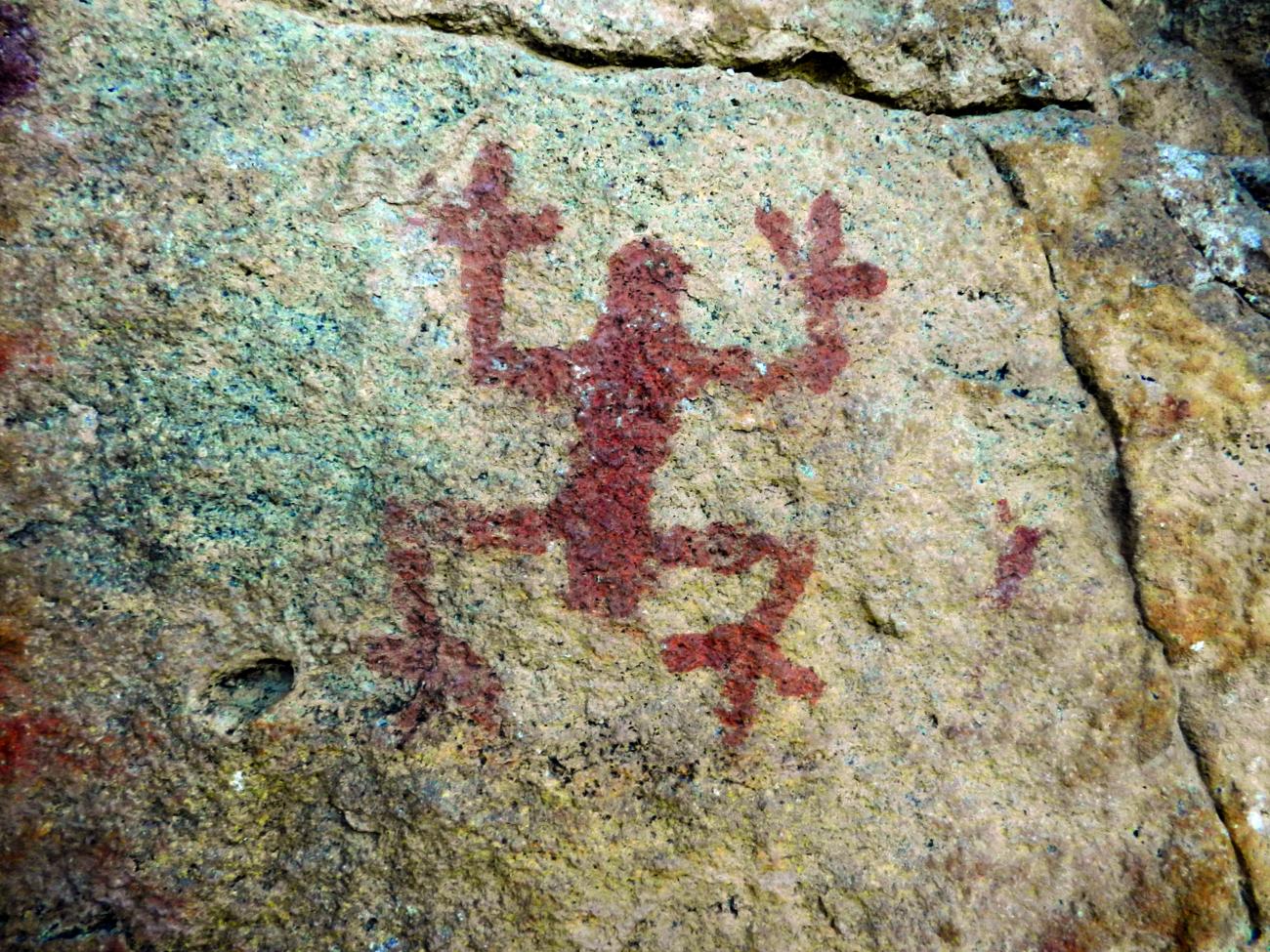
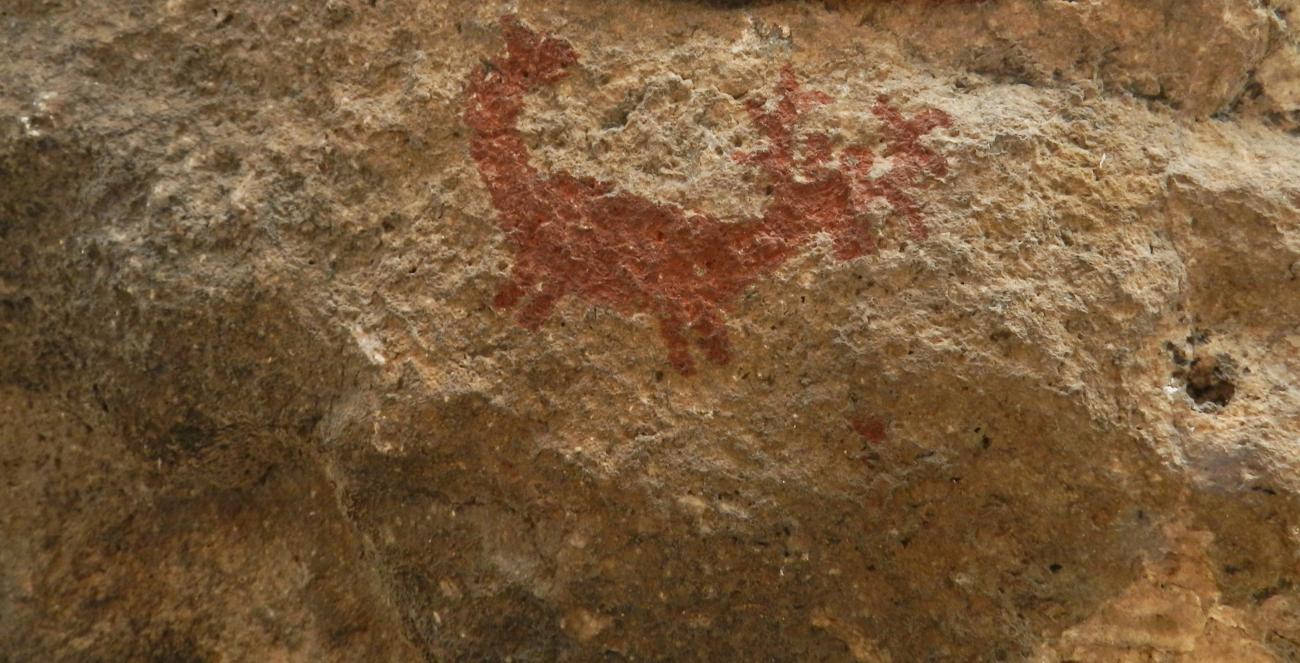
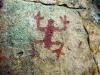
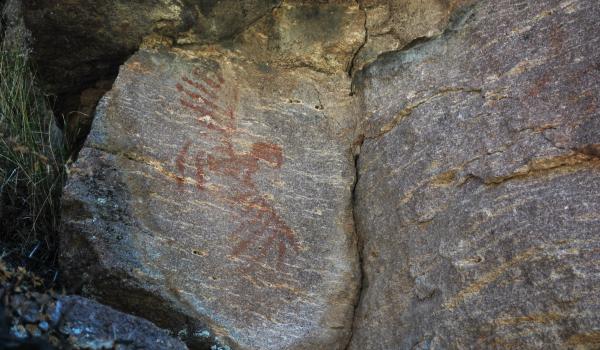
The representations of animals are also schematic, so it is not easy to recognize the species to which they belong. However, it is possible to distinguish quadrupeds (foxes, coyotes, dogs and deer), birds (perhaps eagles or lammergeyers and some hummingbirds), reptiles (lizards, frogs and snakes) and probably some insects (arachnids or scorpions). The motifs representing plants are scarce; some designs of corn plants and perhaps peyotes stand out. As with the animal figures, plants are difficult to identify; in spite of their importance, both in the diet and in the cosmovision, both categories (animals and plants) occupy a secondary place in the rock imagery of Arroyo Seco.
Quadruped and anthropomorphic
Quadruped
Reptile
Deer
Diseños geométricos
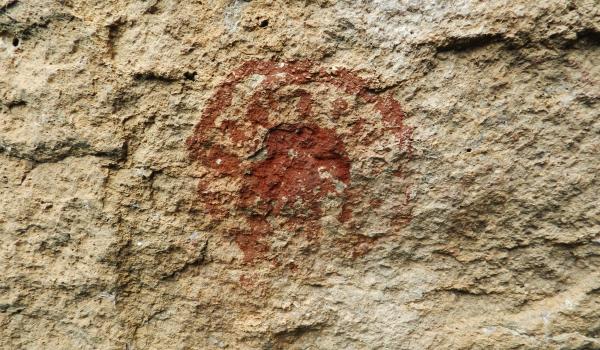
In addition to the human figure, circles are the most common motifs in the art of the archaeological site and were captured in a great variety of designs: concentric, radial, decorated, etcetera. Other geometric motifs such as straight lines, curves, zigzags and series of dots (isolated or grouped…
Diseños geométricos
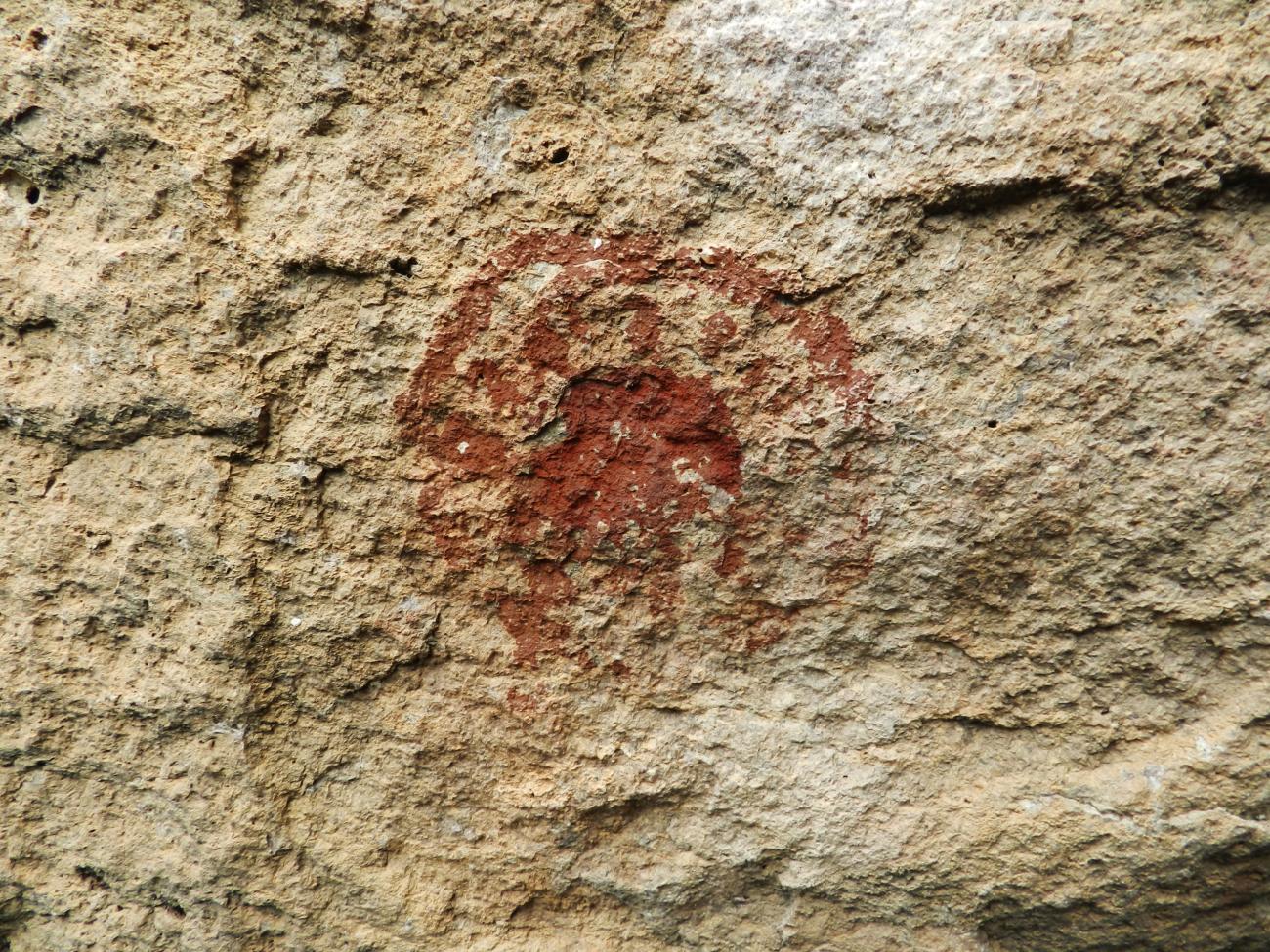
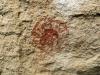
In addition to the human figure, circles are the most common motifs in the art of the archaeological site and were captured in a great variety of designs: concentric, radial, decorated, etcetera. Other geometric motifs such as straight lines, curves, zigzags and series of dots (isolated or grouped) are found in smaller quantities. Although it is not a rule, geometric figures, particularly circles, usually accompany the main motifs of the scene, generally human and animal representations. This example shows a circle with internal rays.
Conquista y colonización. El arte rupestre de la época colonial
With the conquest and colonization of the region beginning in the 16th century, the practice of rock art was transformed and a new iconography emerged, linked to the religion imposed on the indigenous people of New Spain: the crosses, chapels and glosses -generally of religious character-,…
Conquista y colonización. El arte rupestre de la época colonial
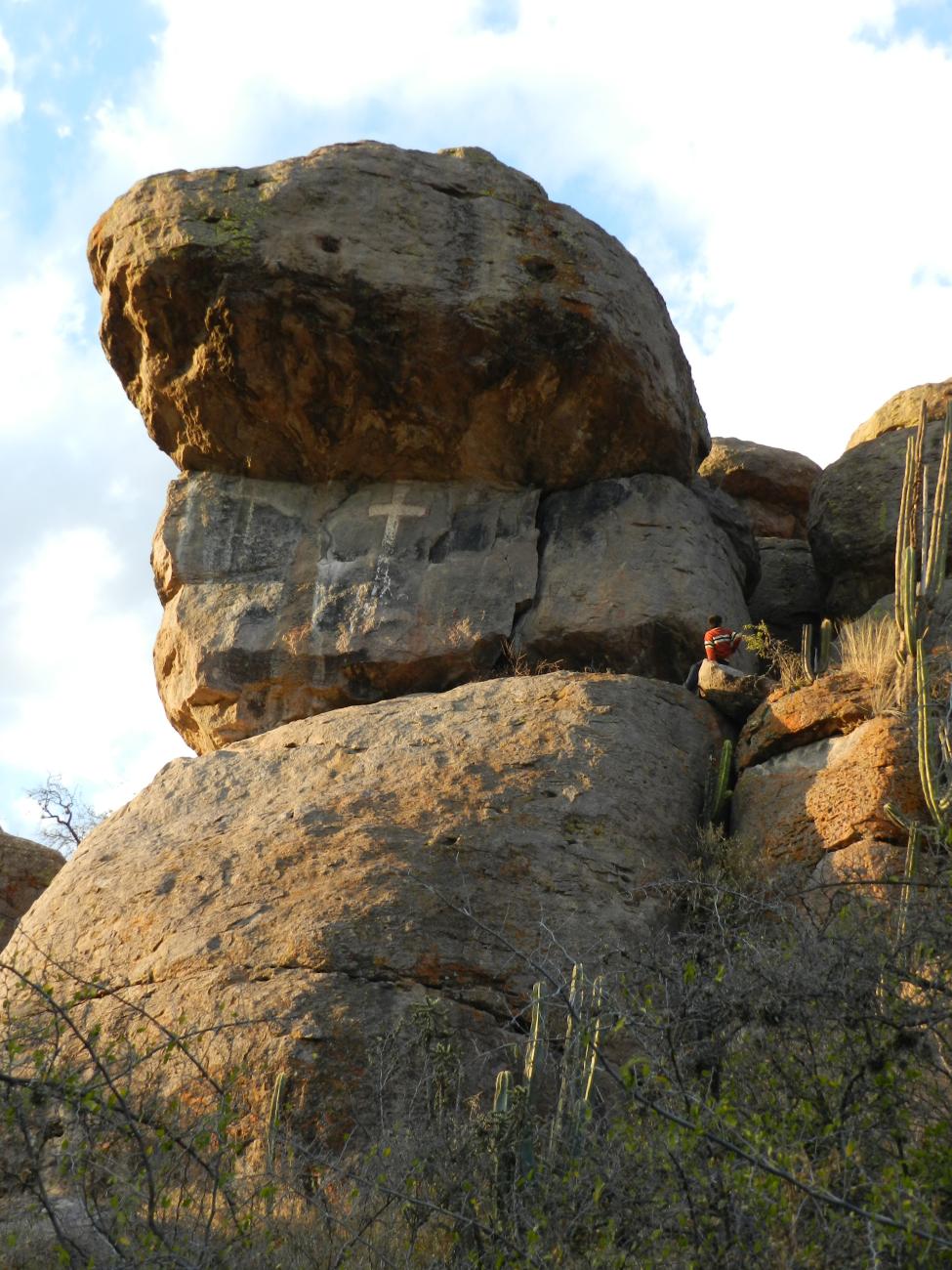
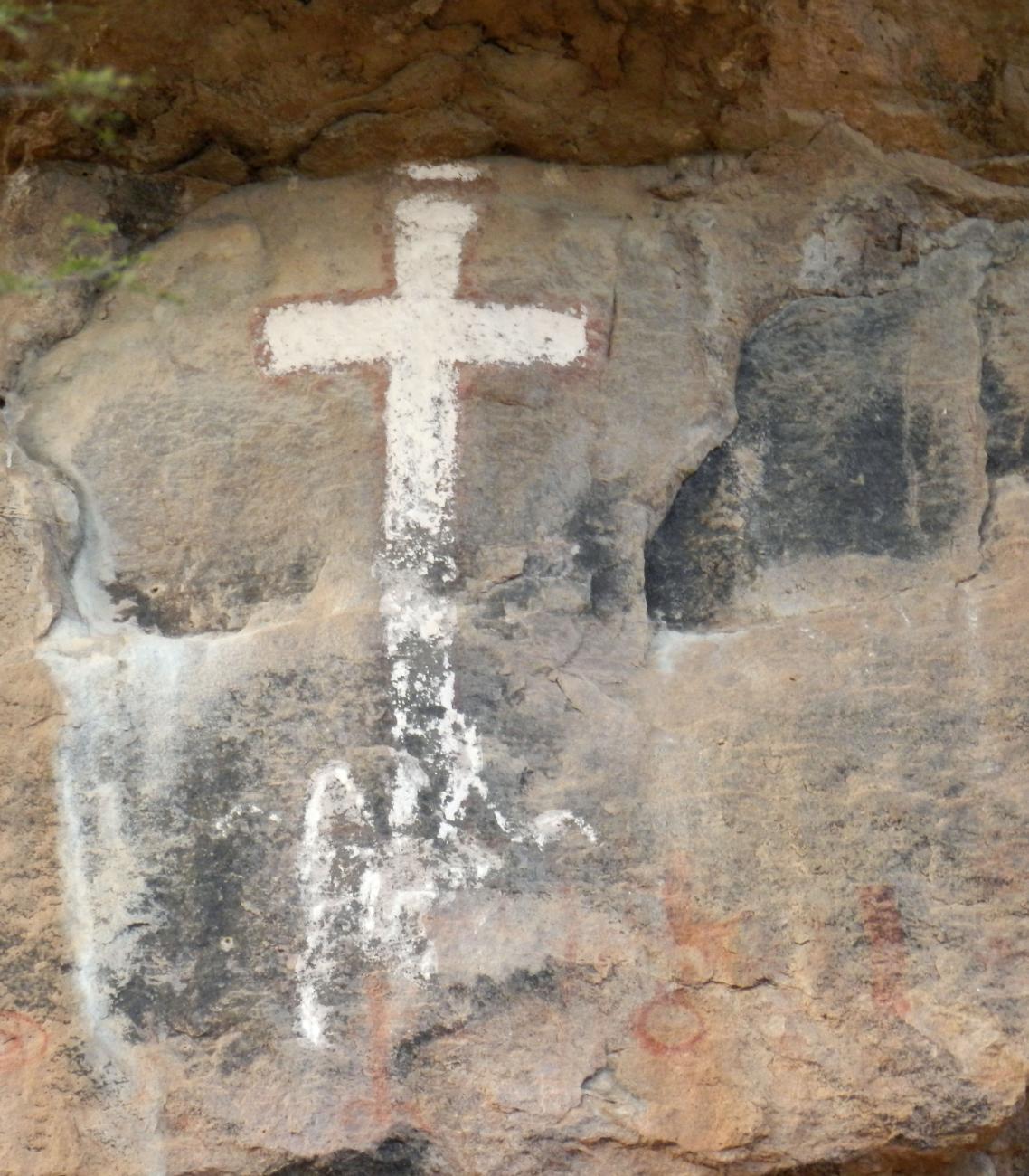
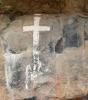
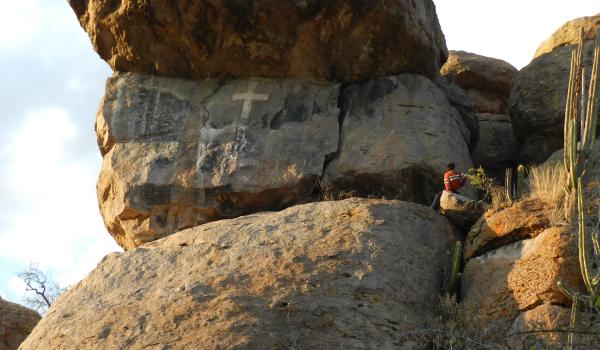
With the conquest and colonization of the region beginning in the 16th century, the practice of rock art was transformed and a new iconography emerged, linked to the religion imposed on the indigenous people of New Spain: the crosses, chapels and glosses -generally of religious character-, sometimes denied and in others reinforced and revitalized the old sacred spaces of the warlike nomadic Chichimecas and Arroyo Seco did not escape to this situation: in several of its supports we find vestiges of the missionary work shaped in the rock.
Cross
Characters
Fragilidad
Because of its exposure to the open air, rock art is exposed to acts of deterioration. It has survived with greater or lesser success to inclement weather, such as rain, wind, sunlight or frost; however, the main dangers to its conservation are ignorance of what it represents, vandalism and greed,…
Fragilidad
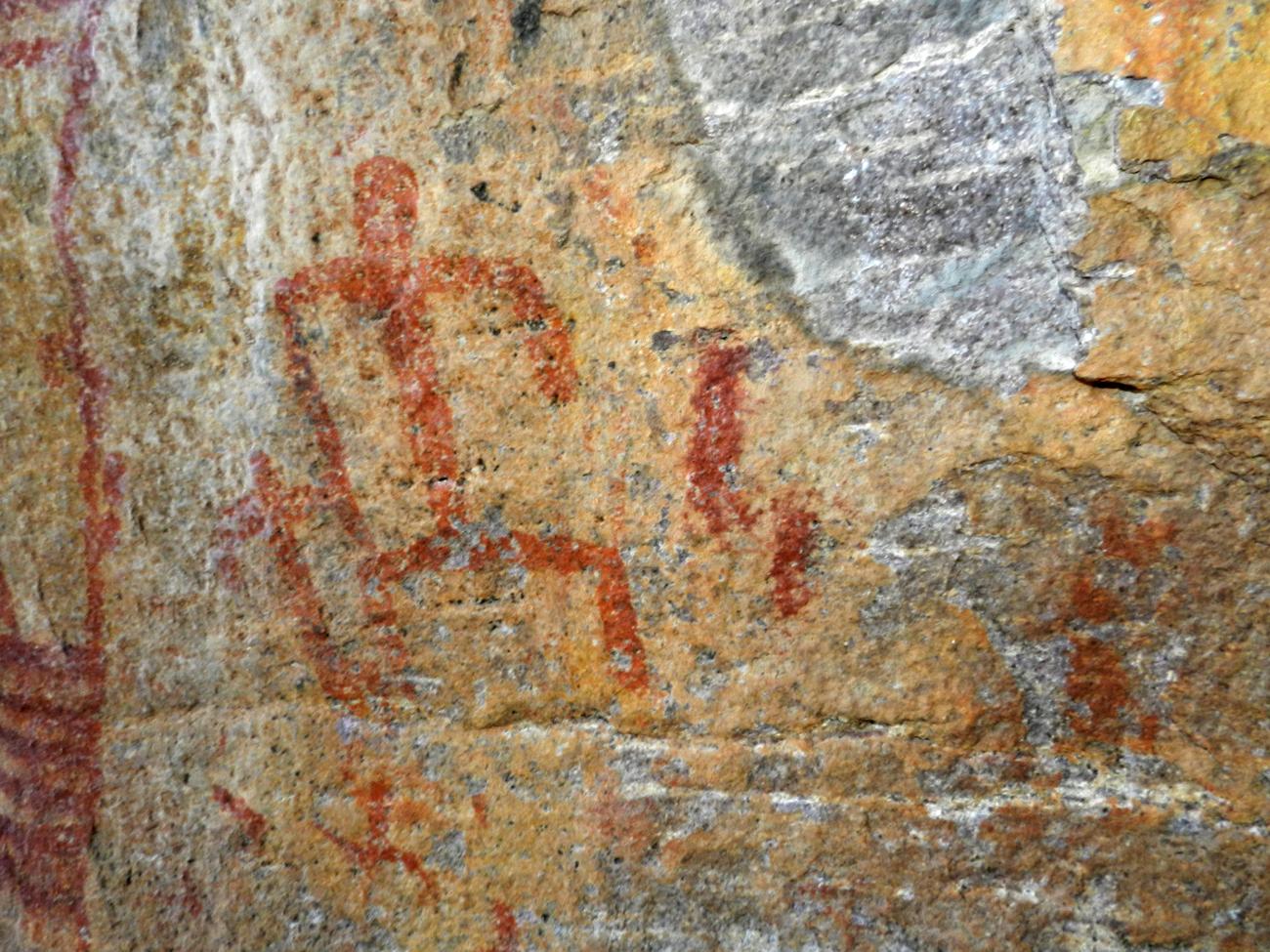
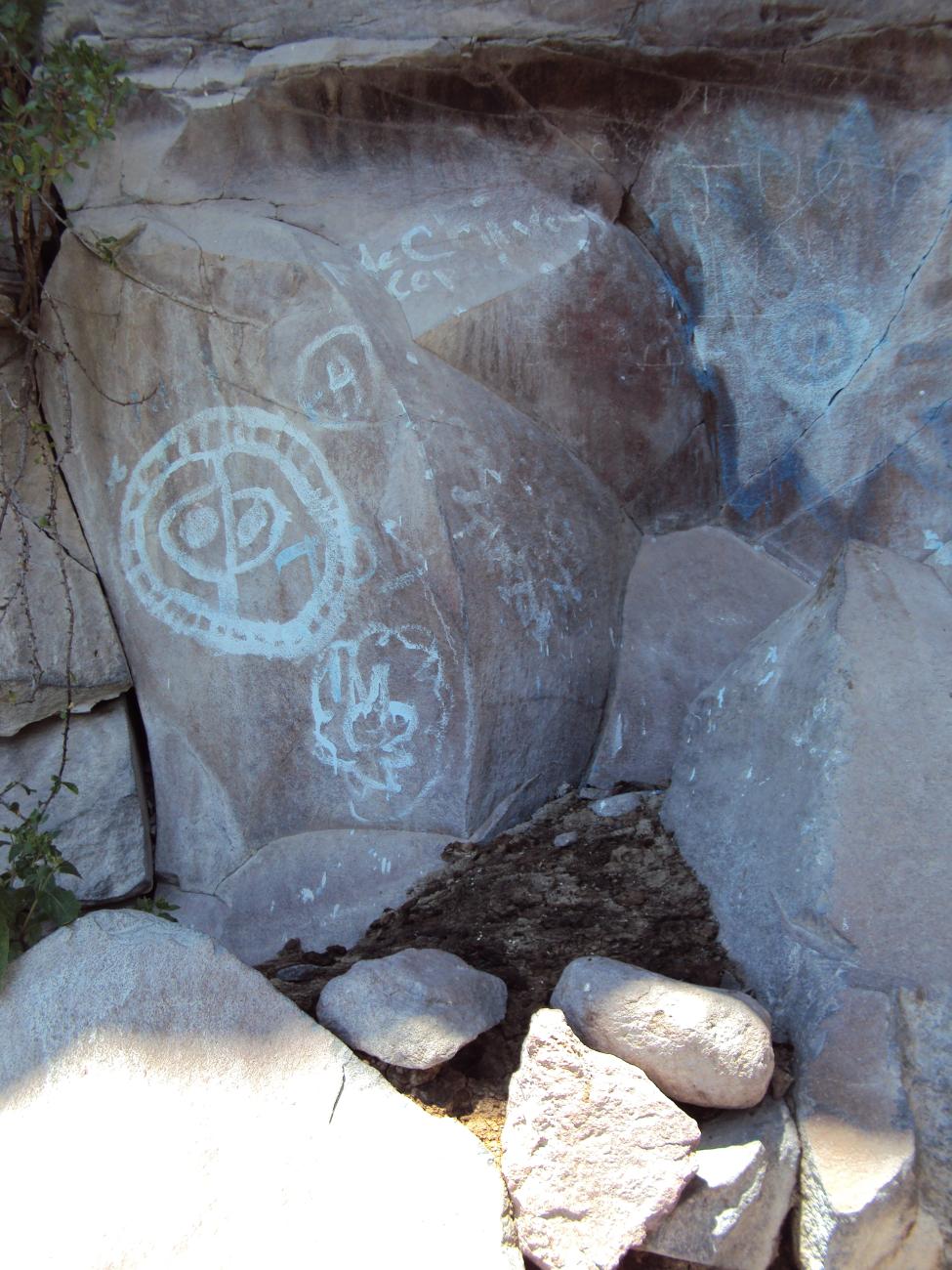
Because of its exposure to the open air, rock art is exposed to acts of deterioration. It has survived with greater or lesser success to inclement weather, such as rain, wind, sunlight or frost; however, the main dangers to its conservation are ignorance of what it represents, vandalism and greed, which have caused the disappearance of many rock art sites. It is important to reflect that each rock design is a unique and unrepeatable manifestation, which encloses part of the cosmovision, the way of thinking, the belief systems and the history of the ancient societies that inhabited the territory; it is a legacy of the societies that preceded us. They are, in their own right, part of the cultural heritage of Mexico and the world, so their protection and conservation as a heritage asset requires the participation of society.
Graffiti on Cerro del Meco (Comonfort)


Contact
- Dirección del Centro INAHGuillermo González Leónguillermo_gonzalezleon@inah.gob.mx+52 (473) 733 0857